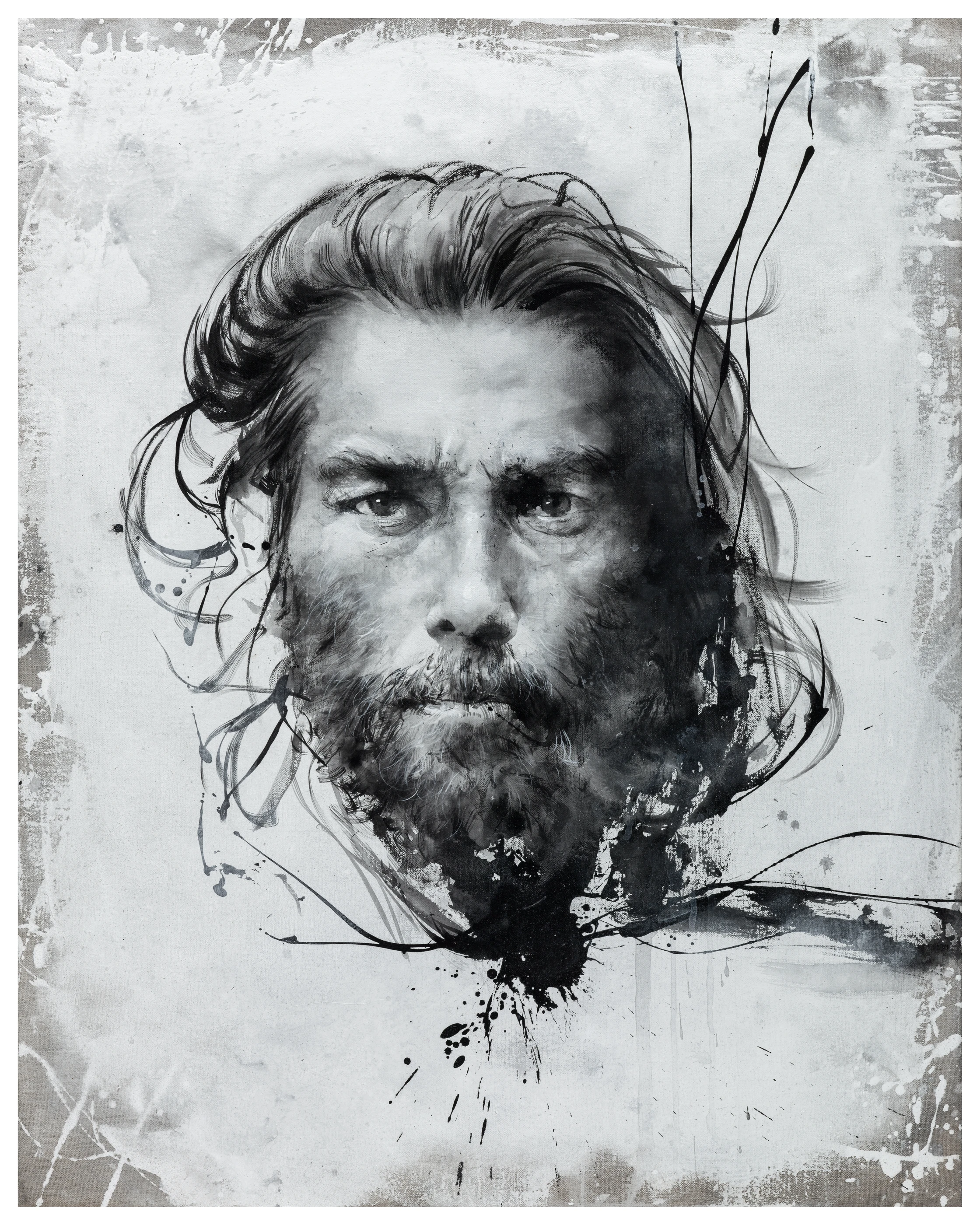
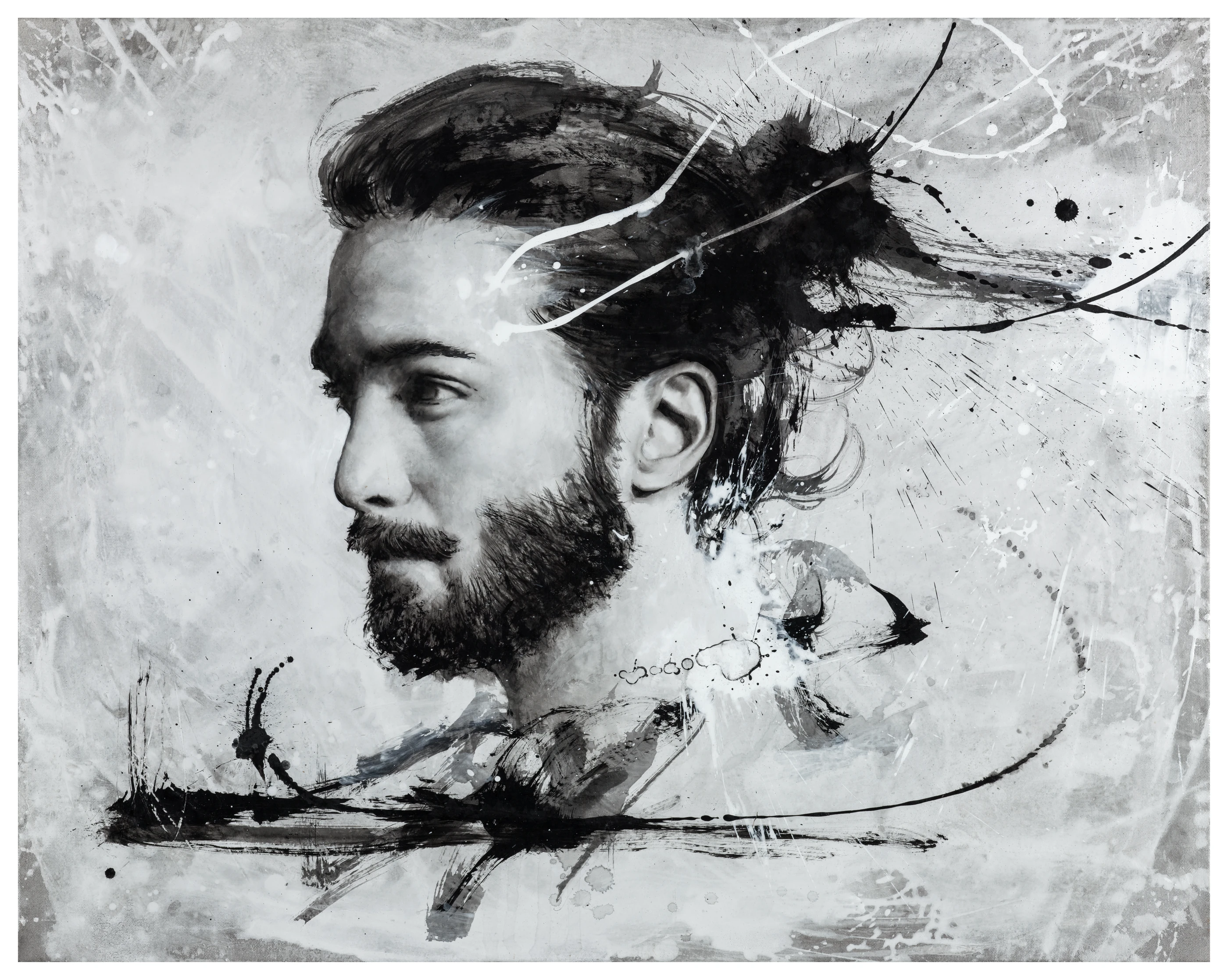
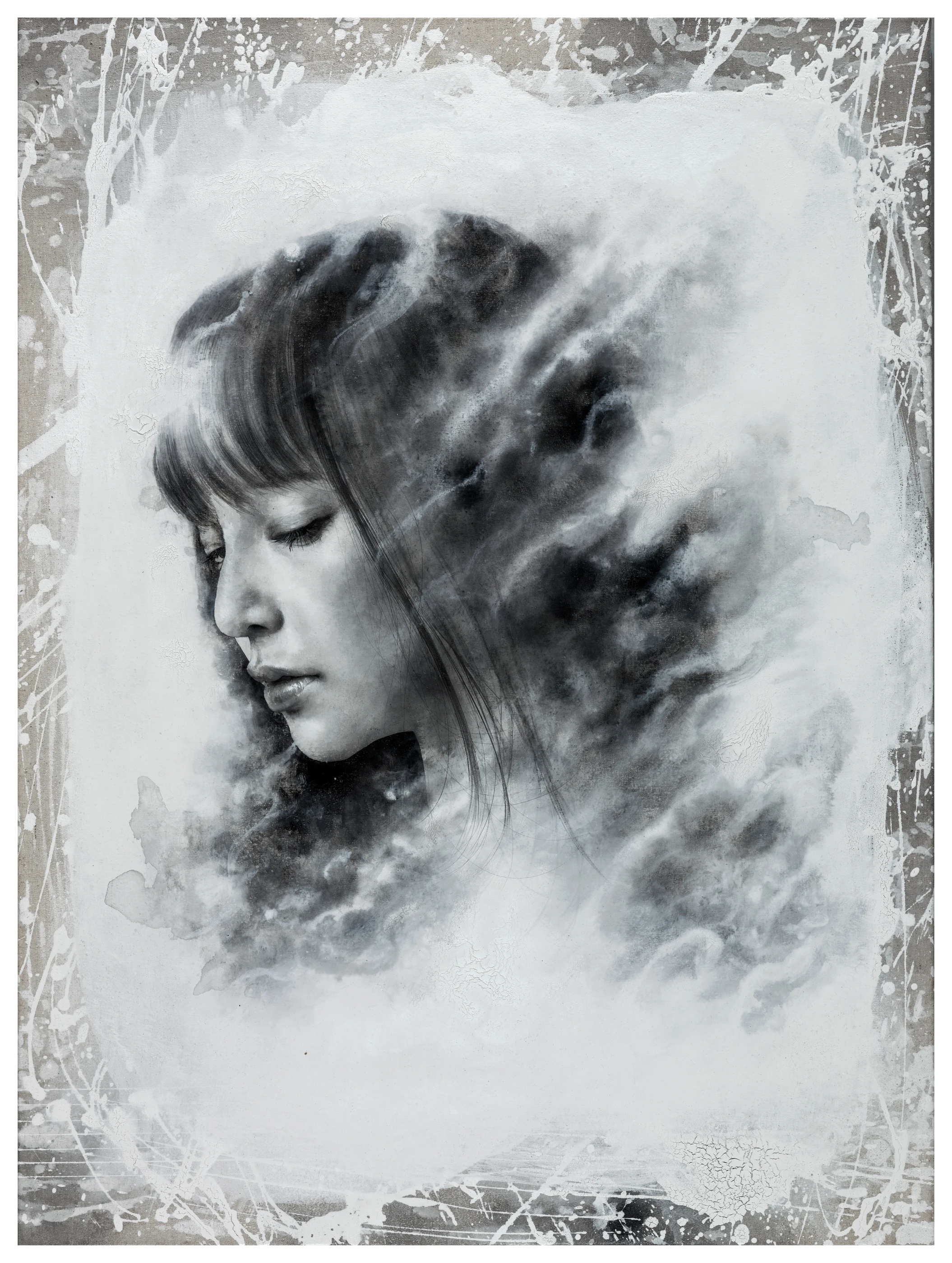
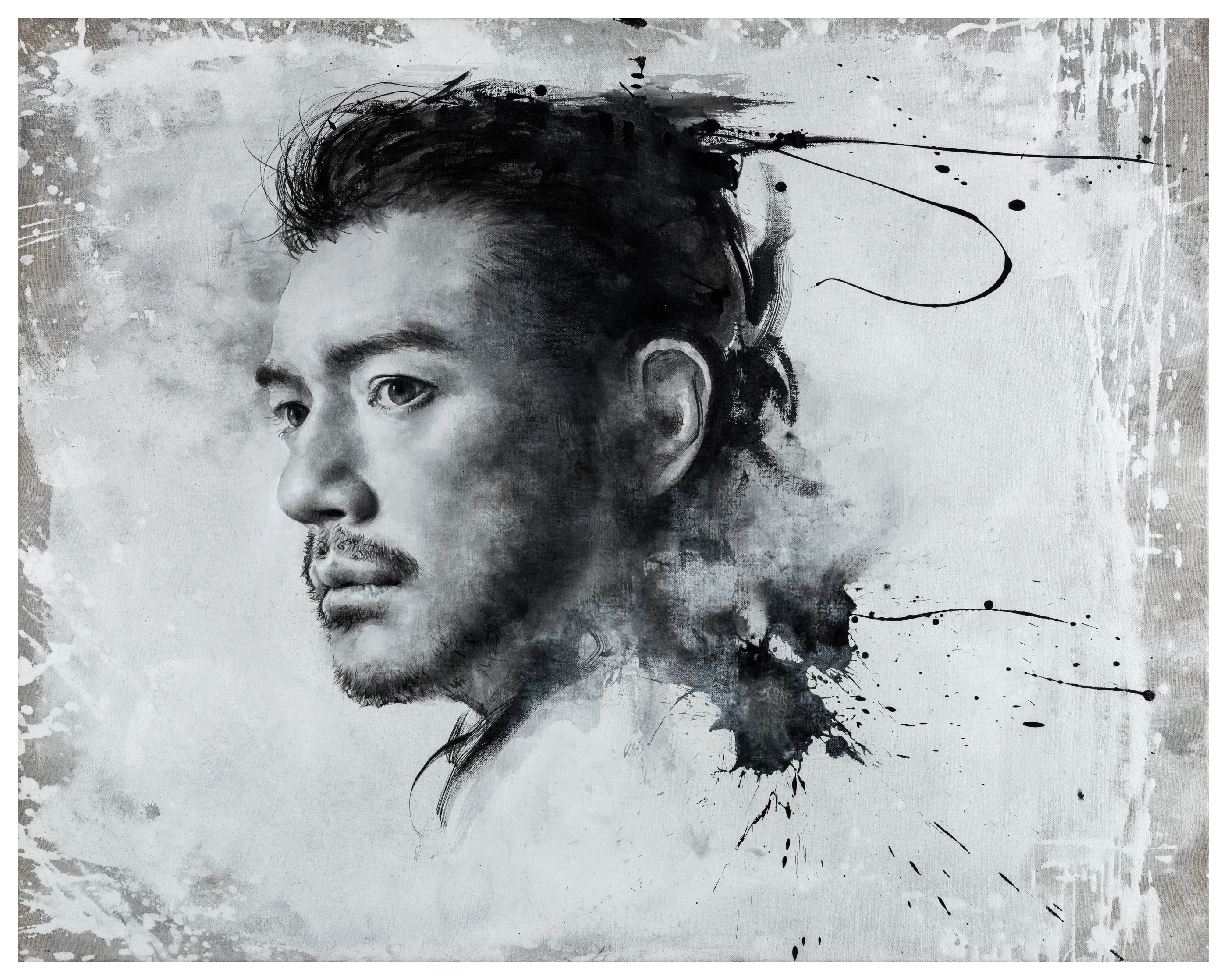
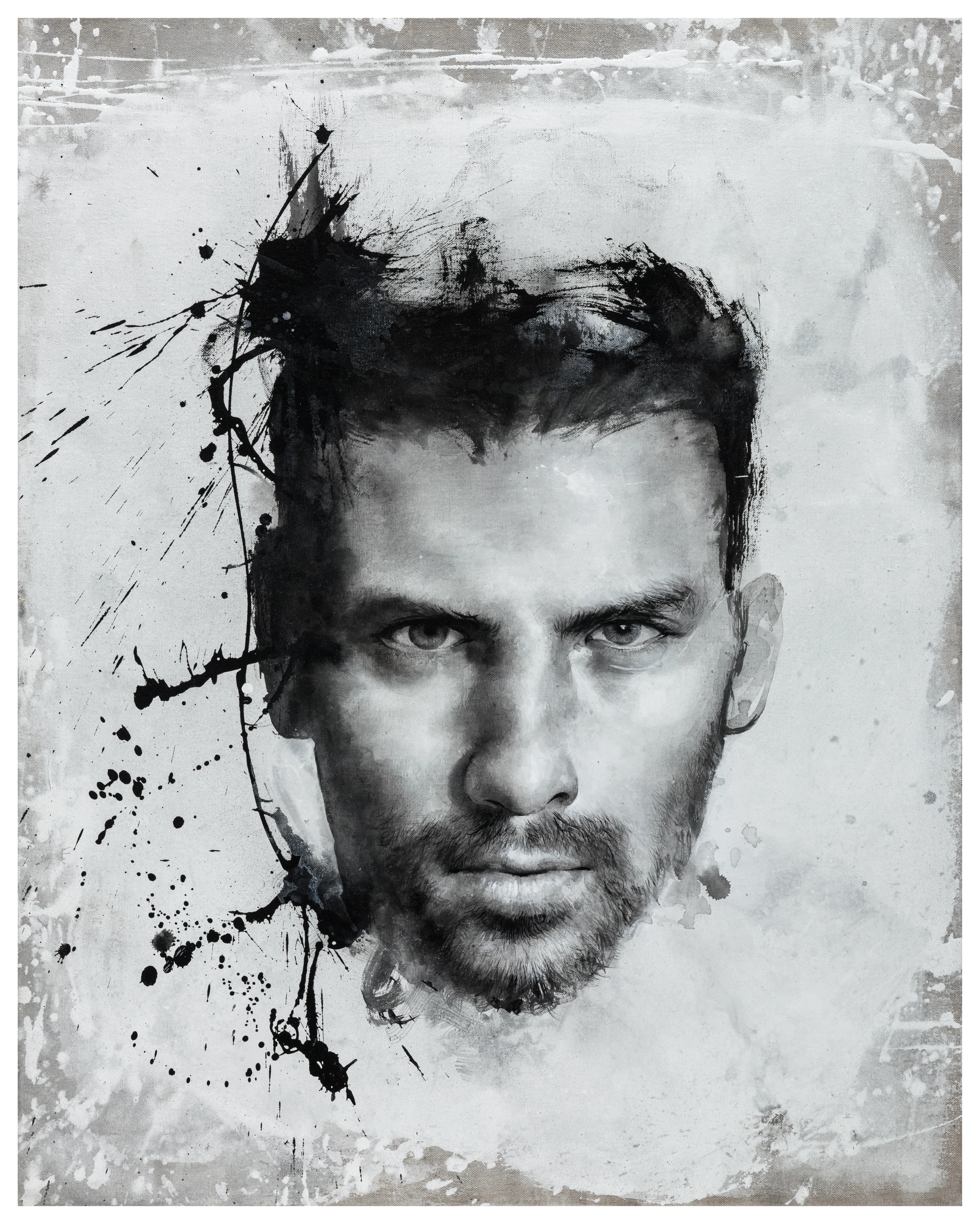
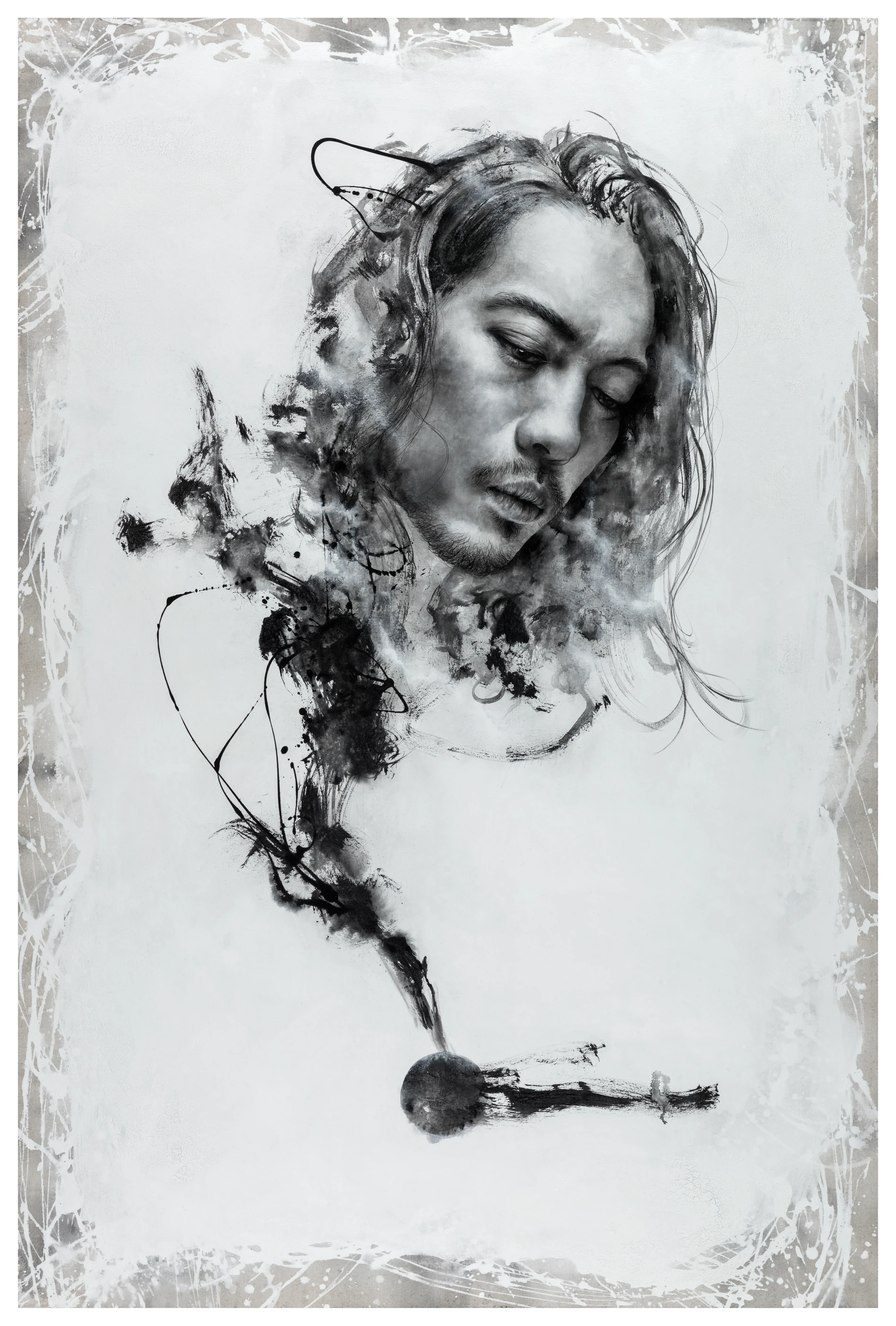
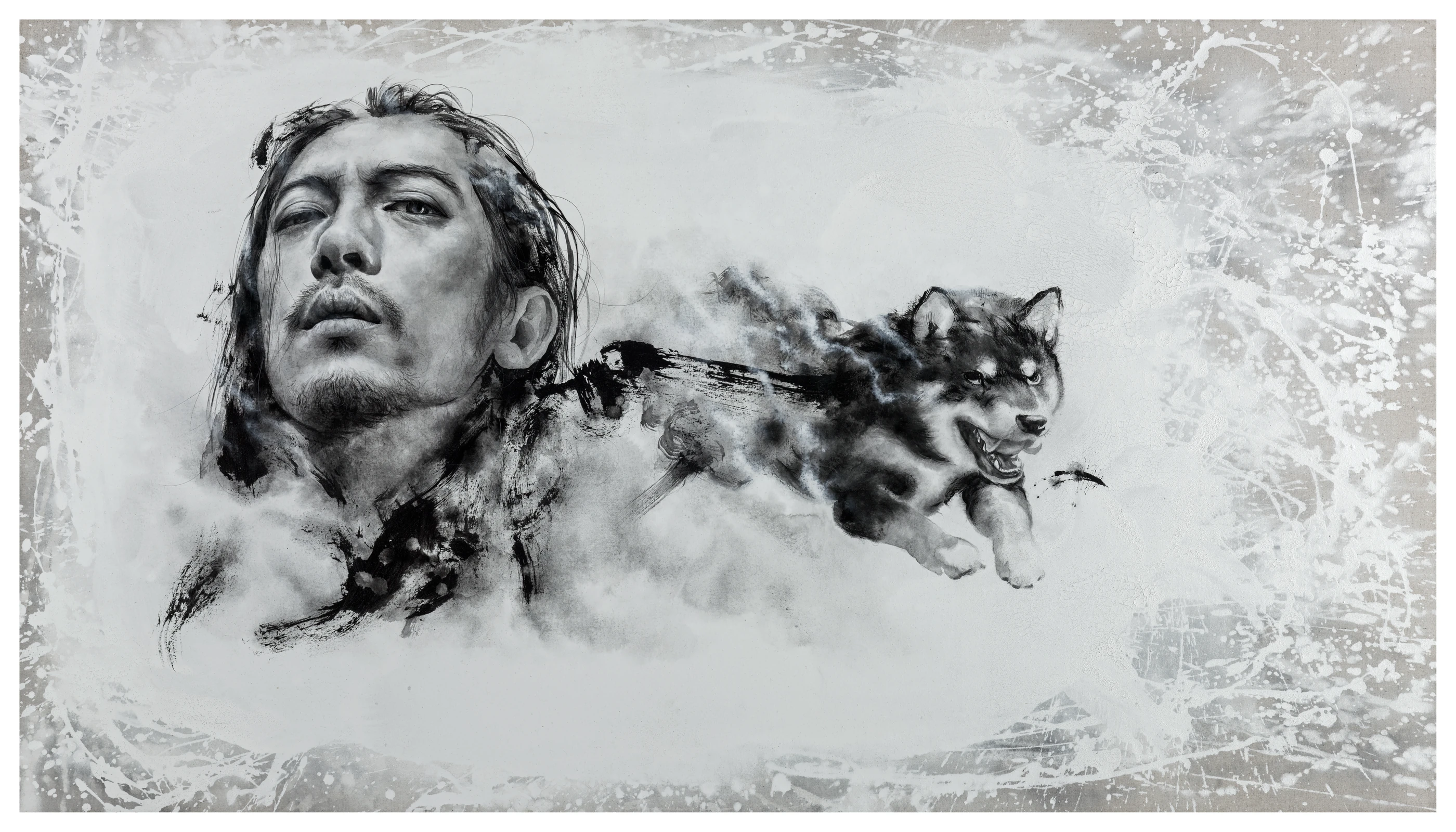
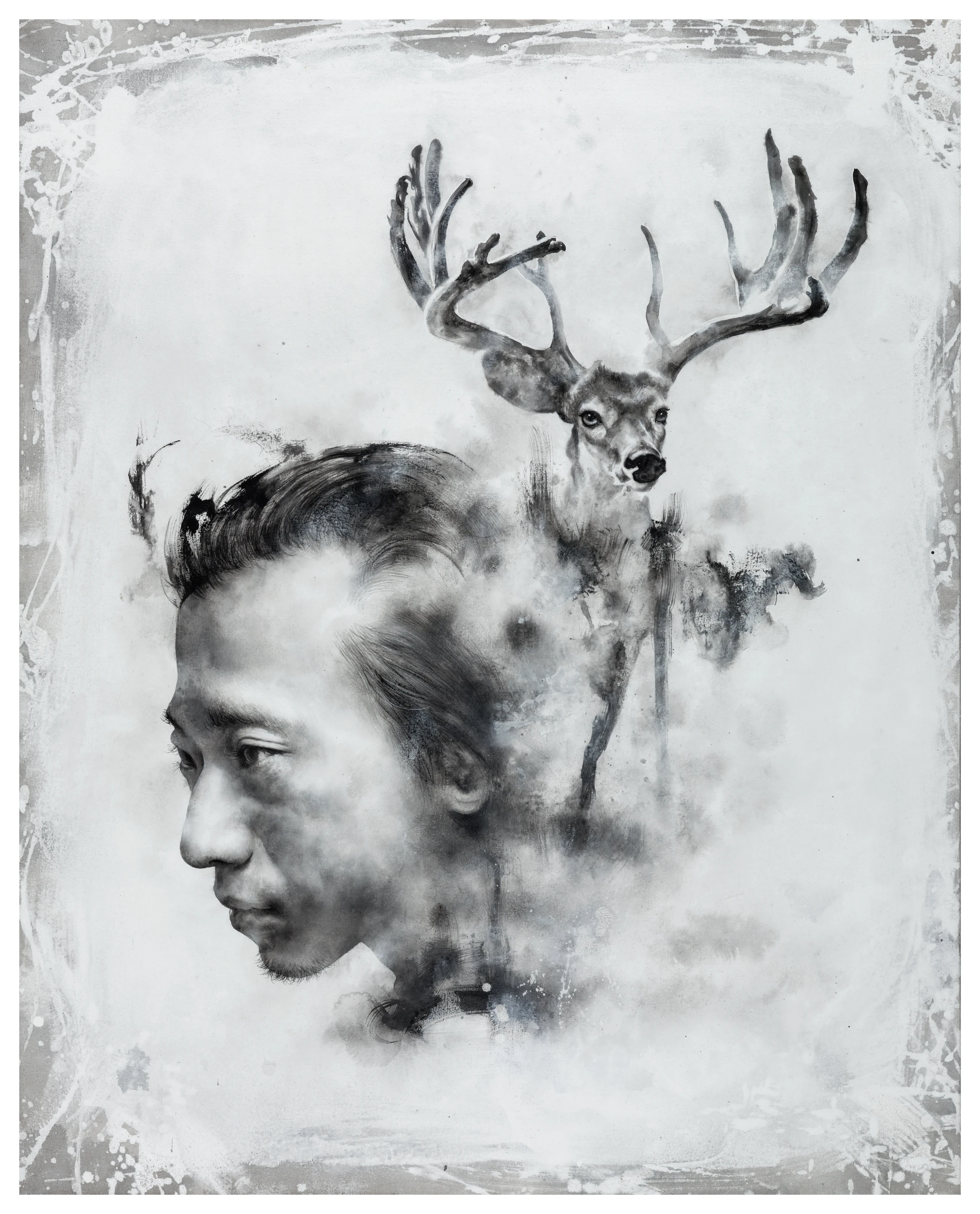
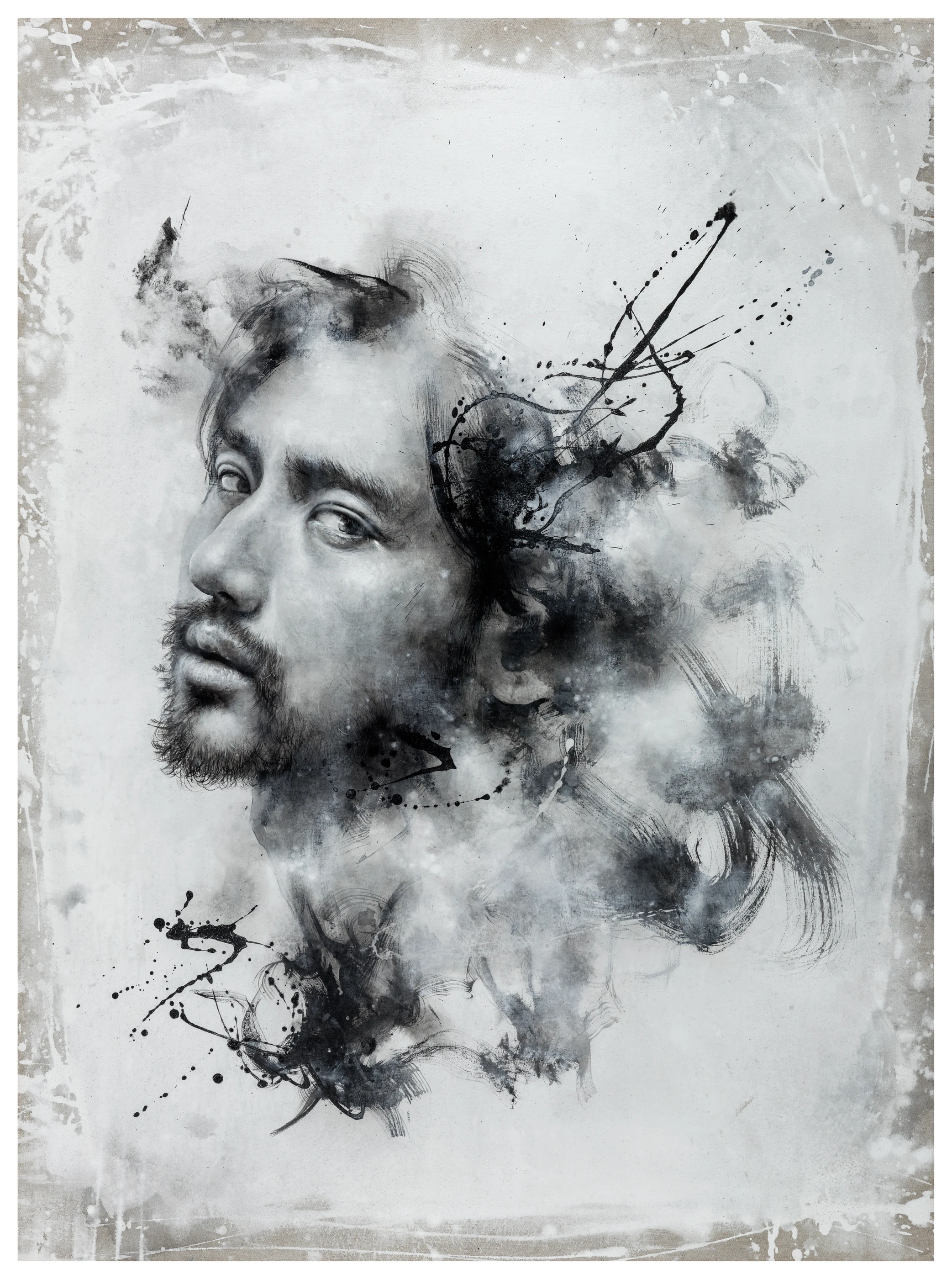
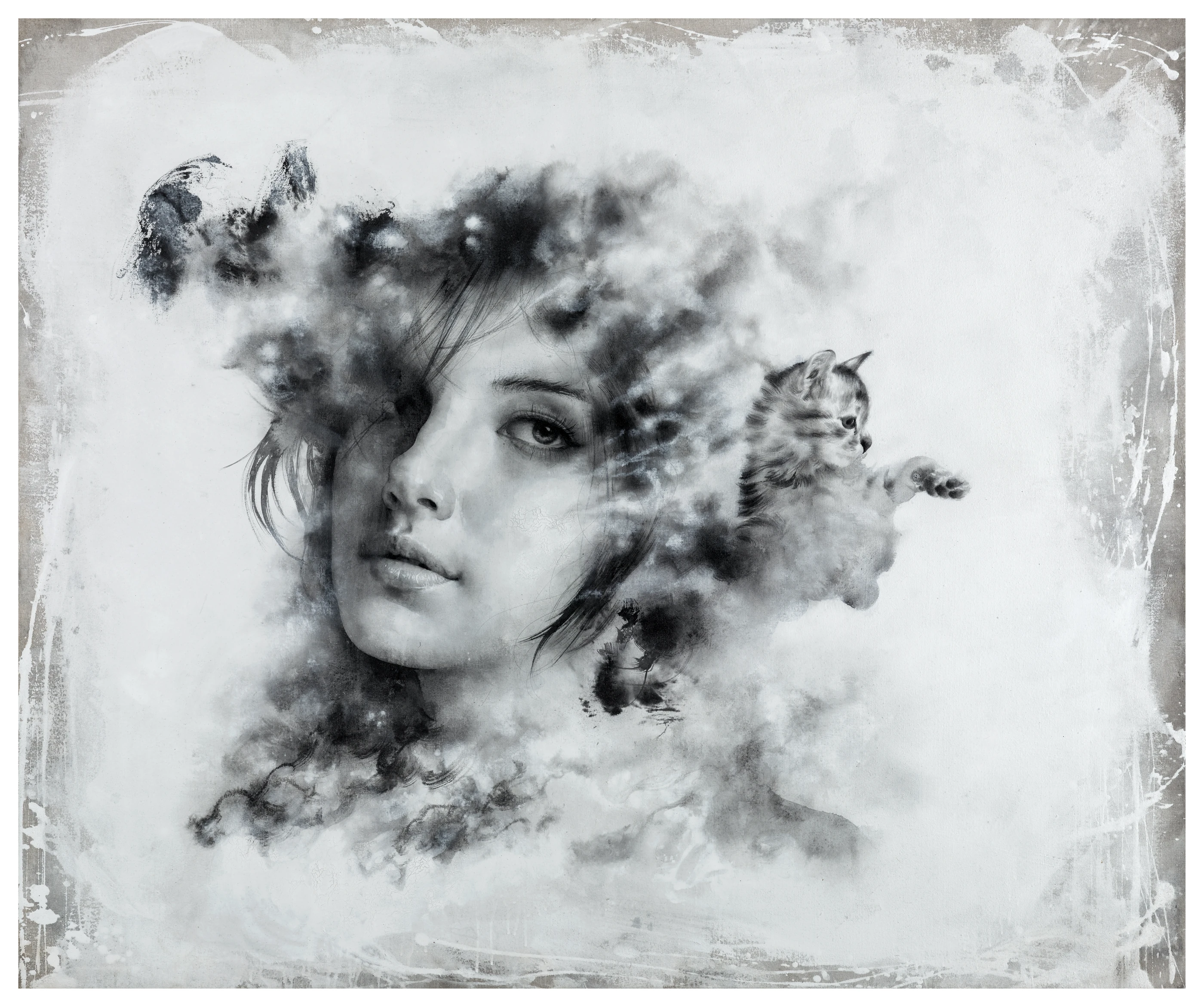
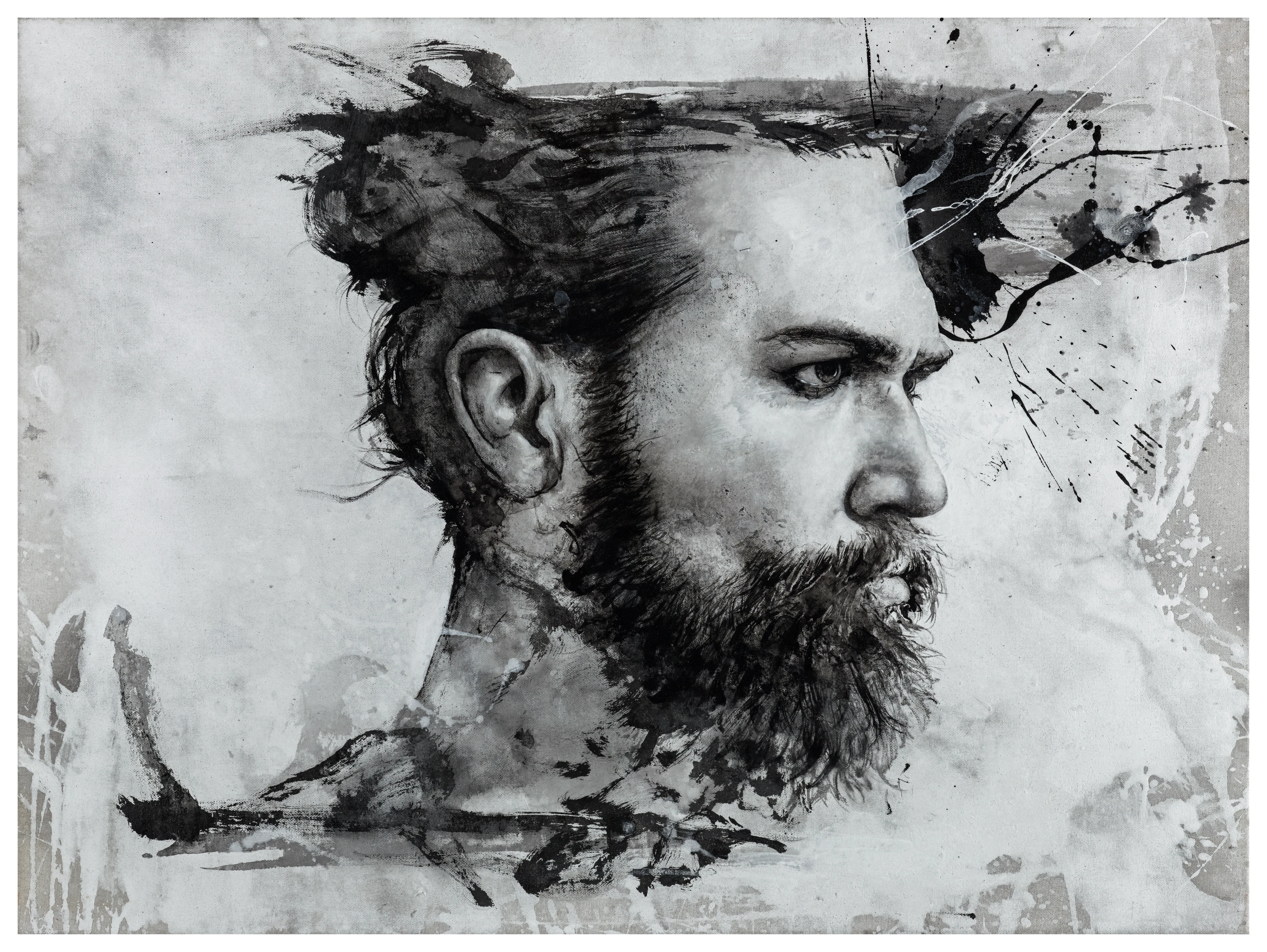
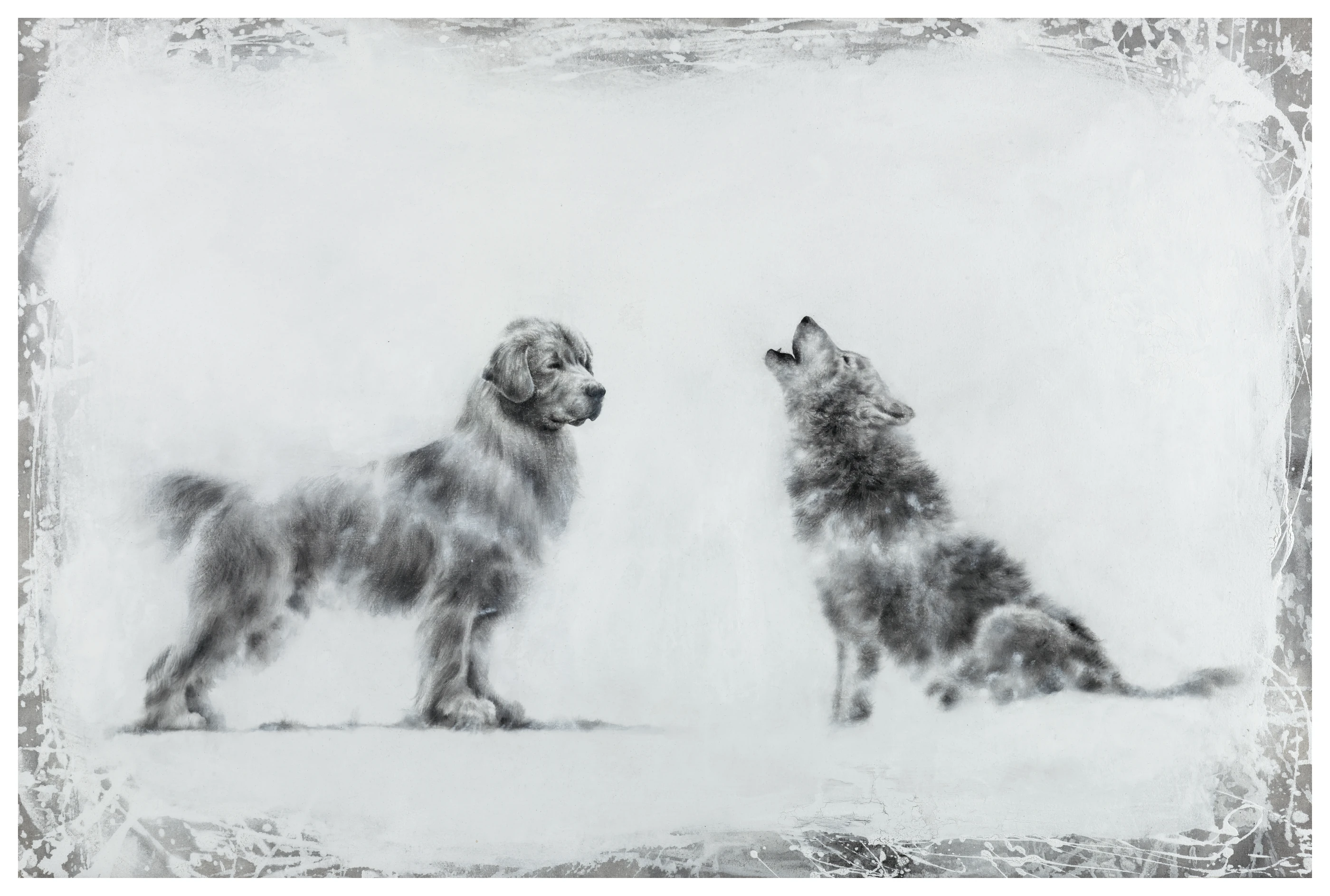
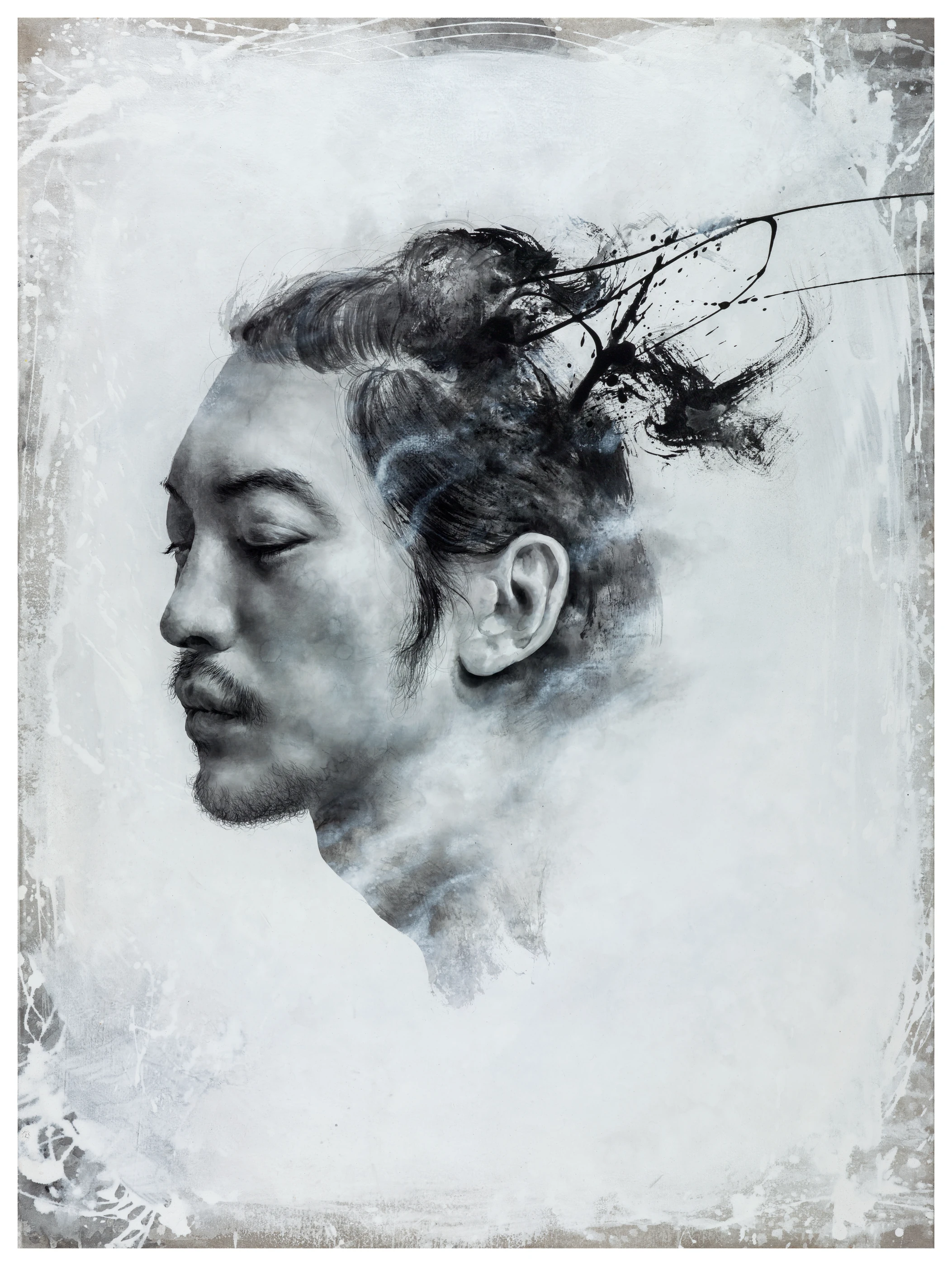
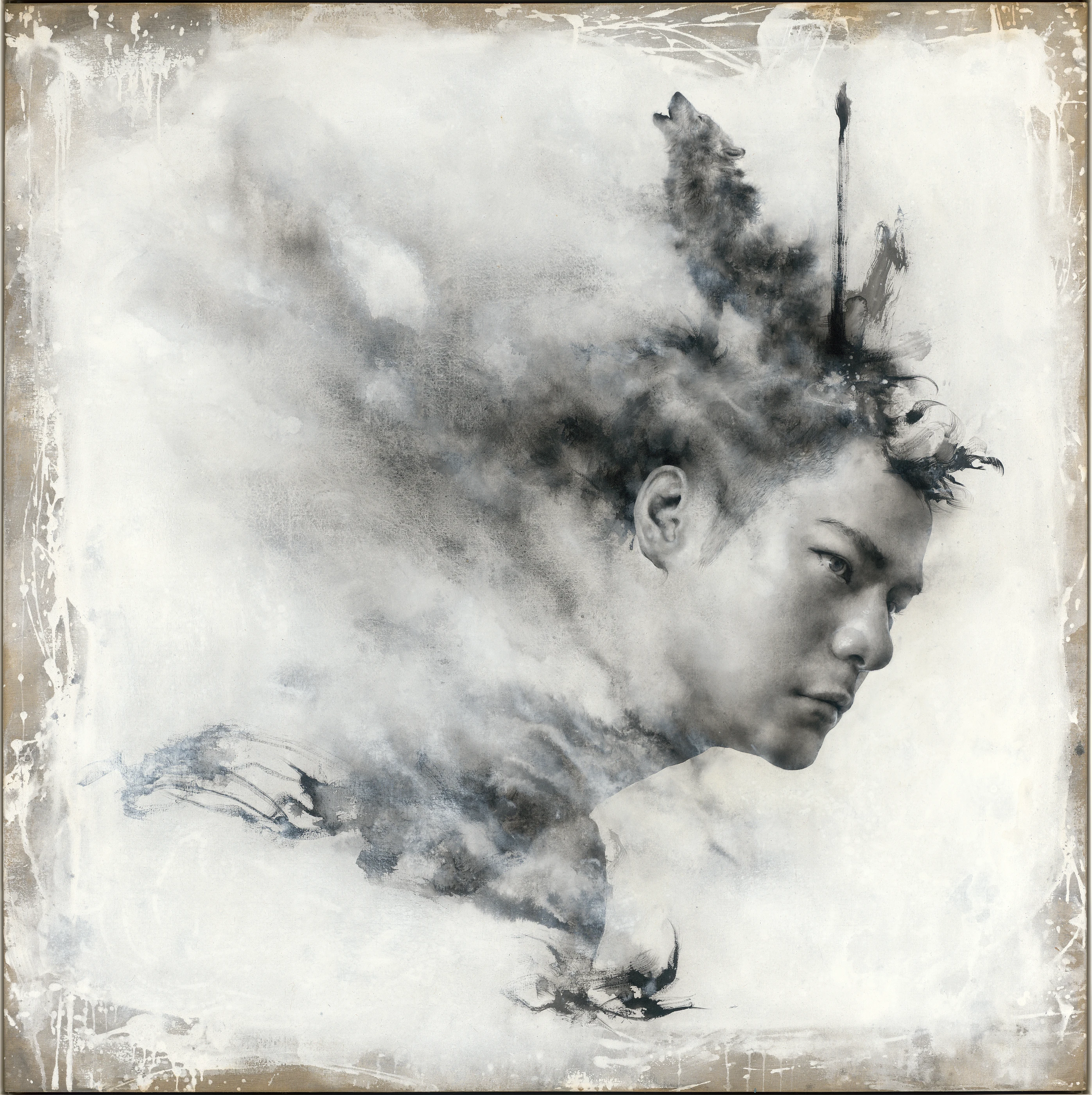
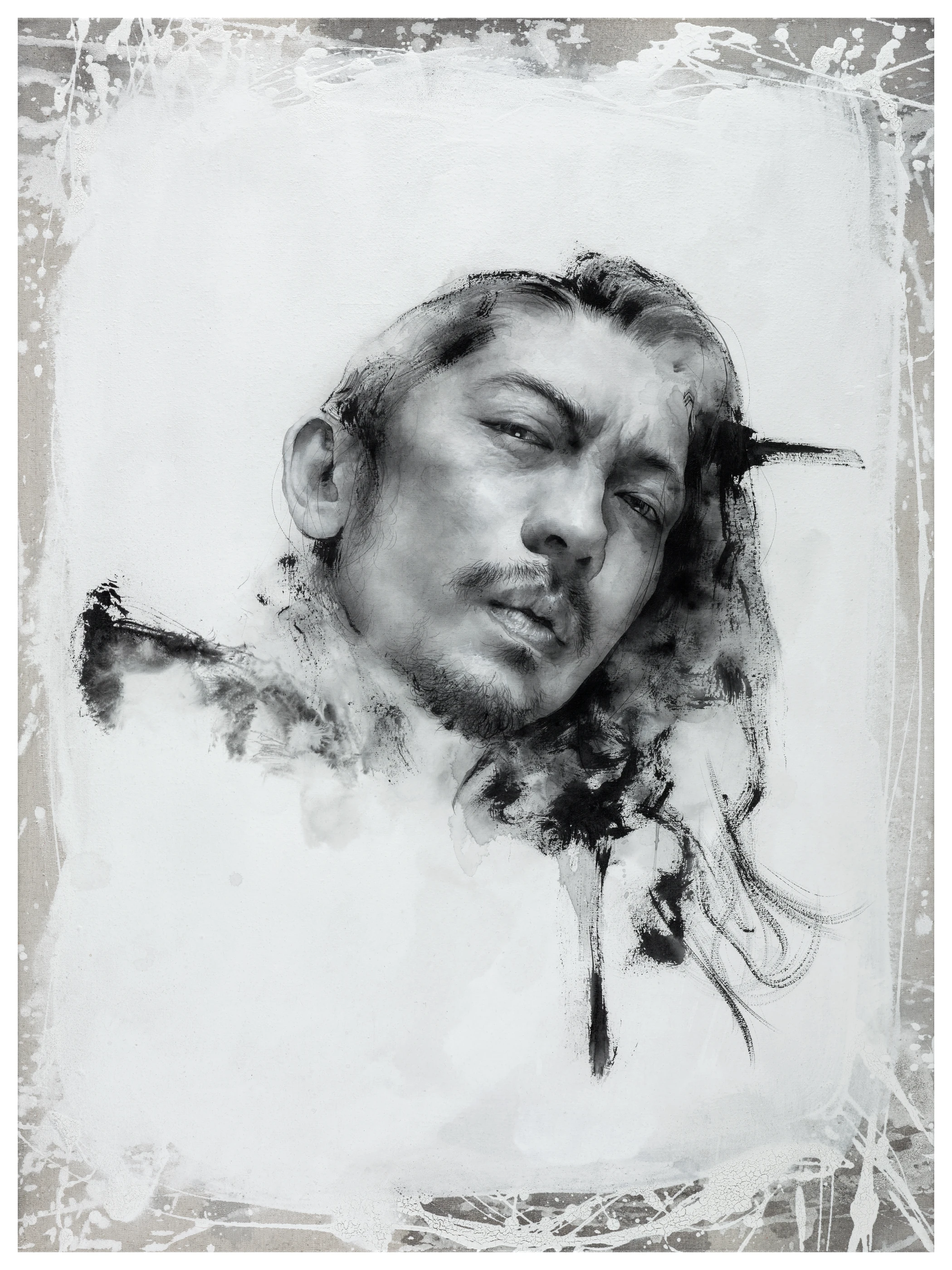
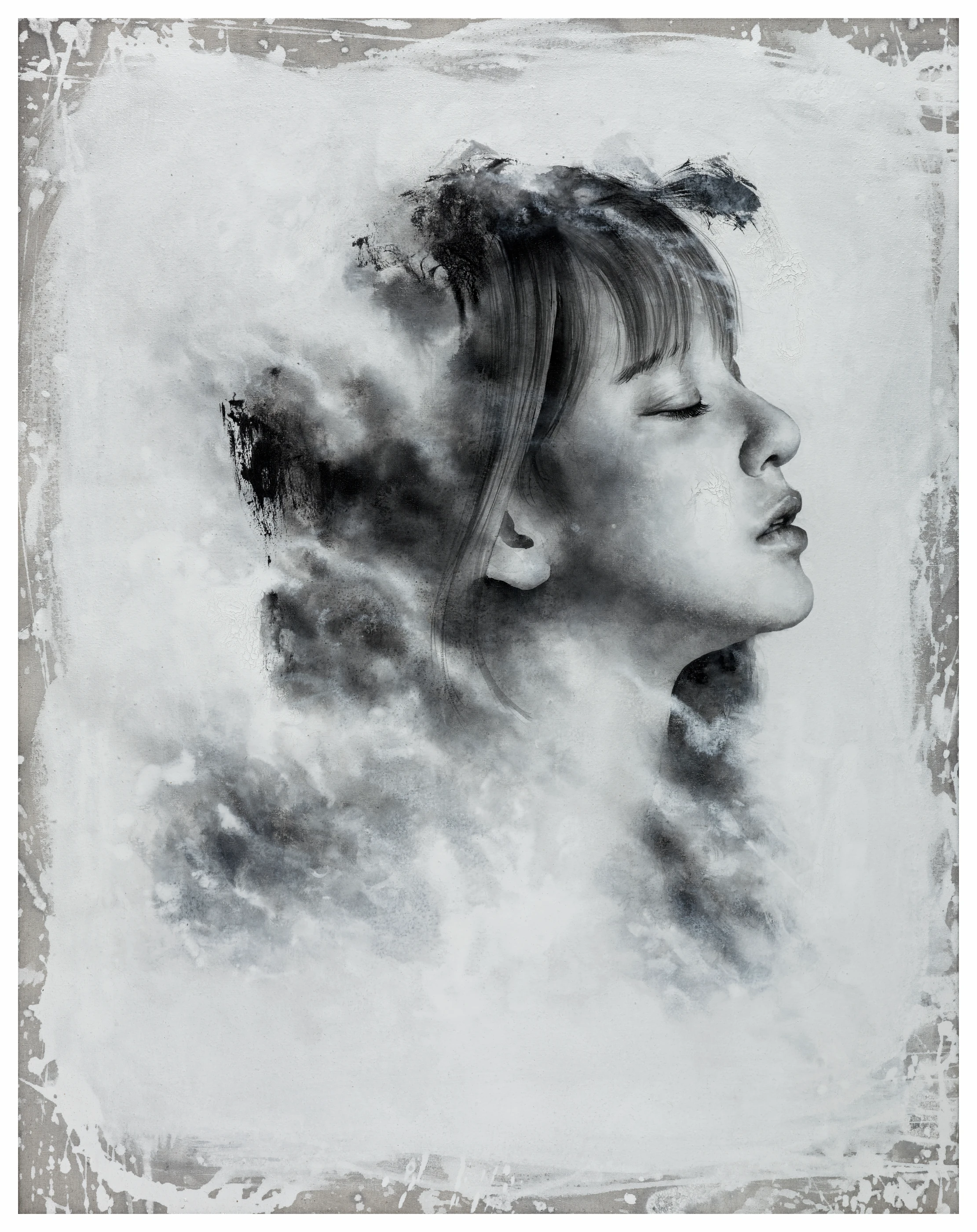
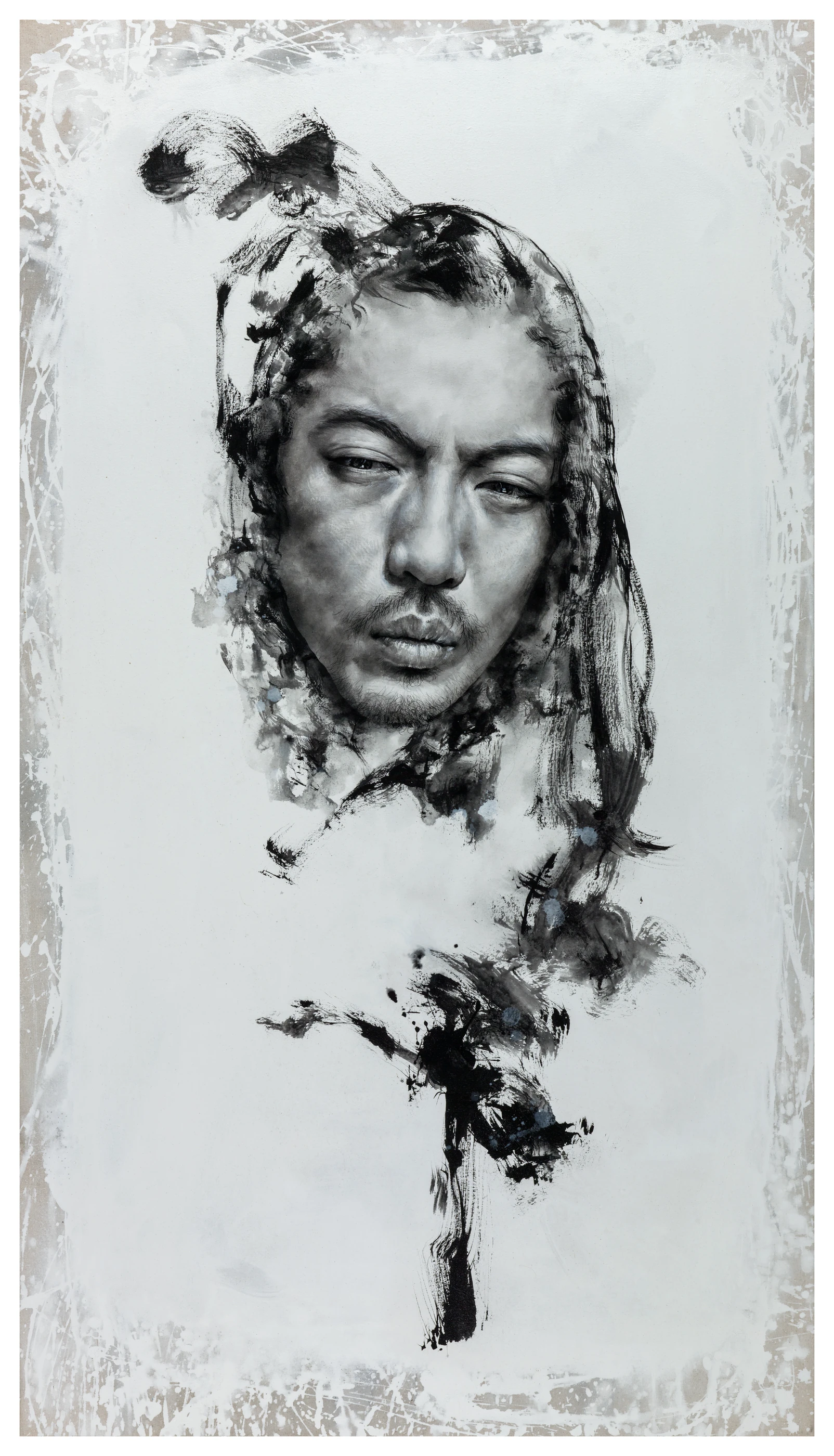
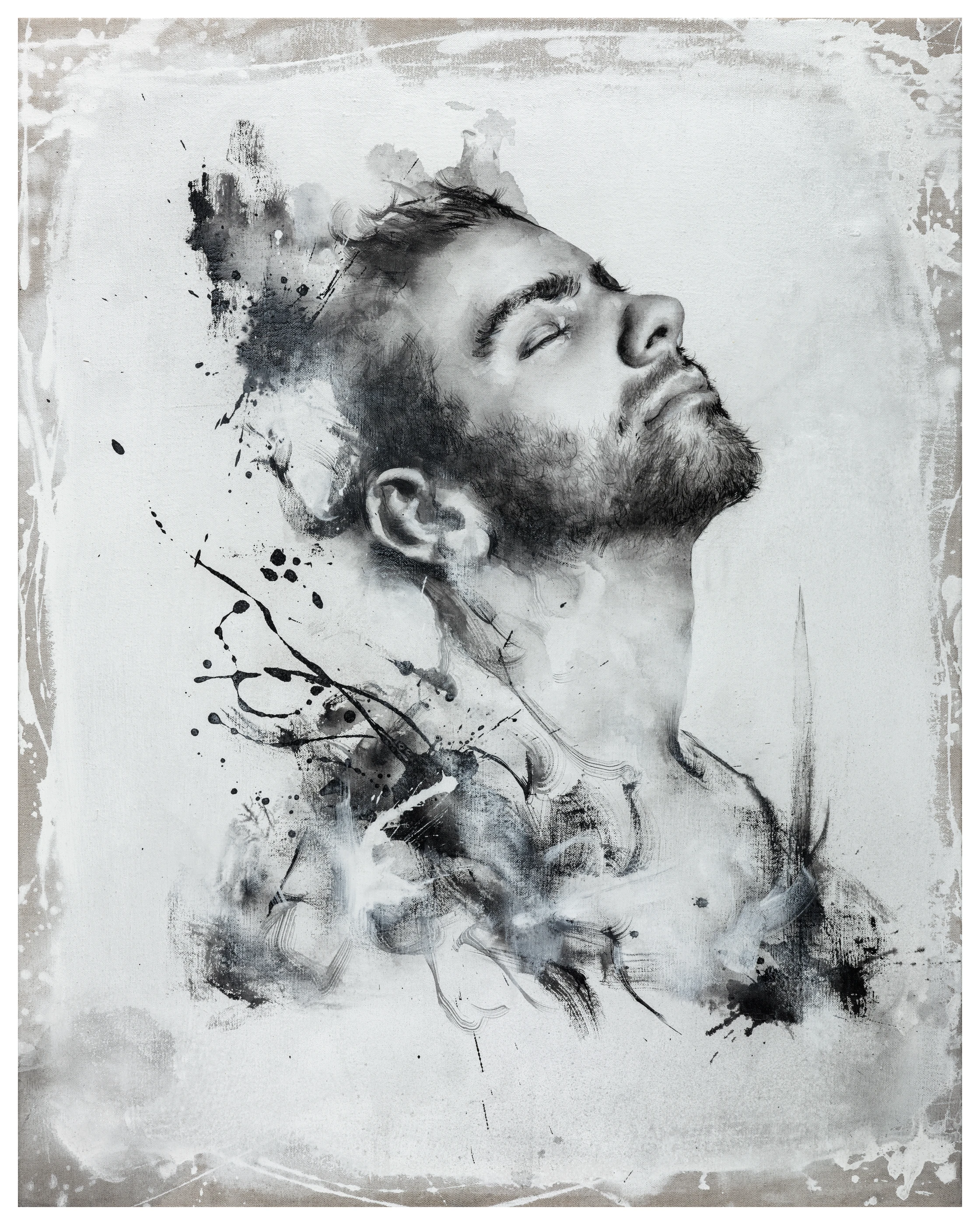
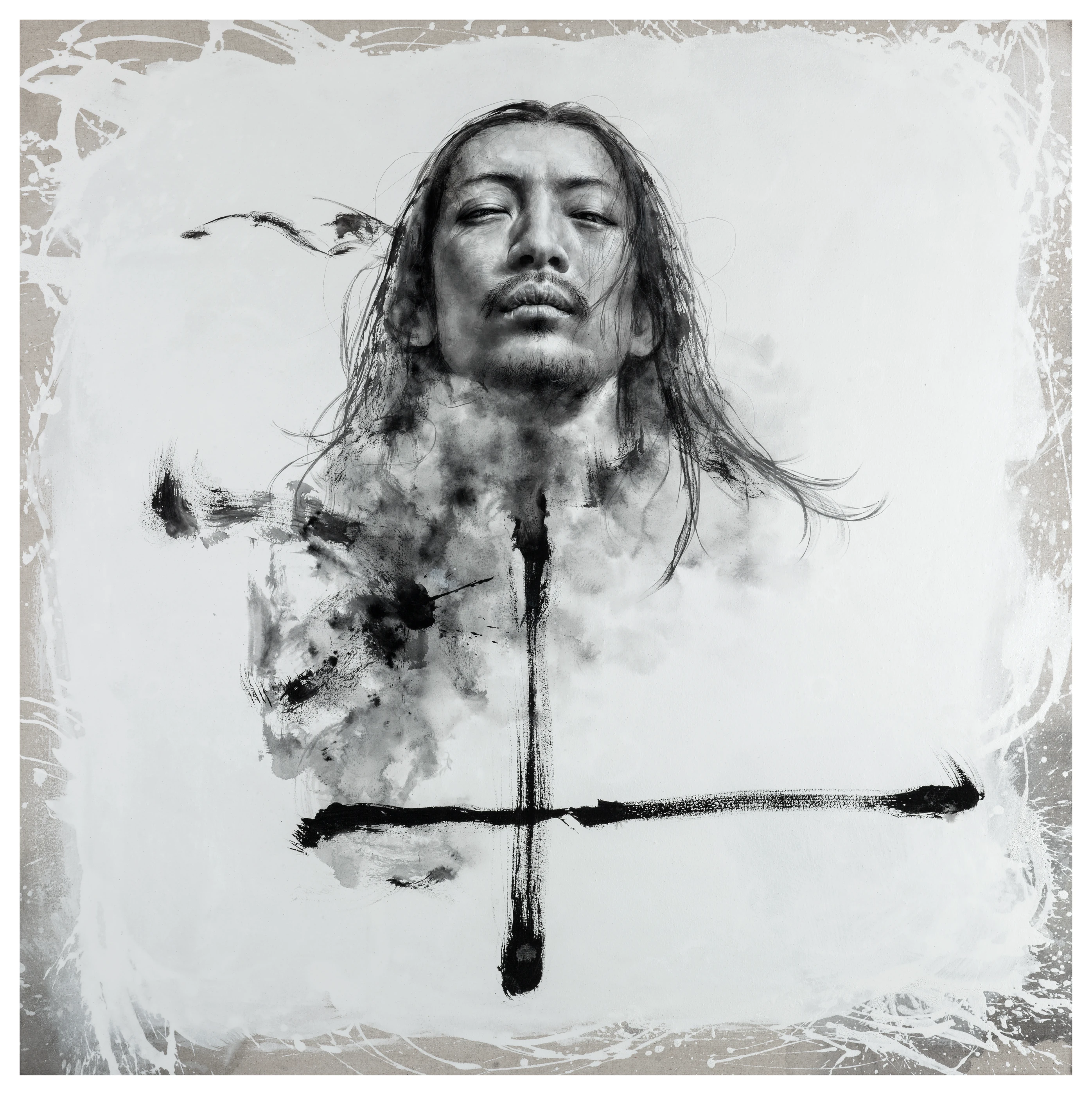
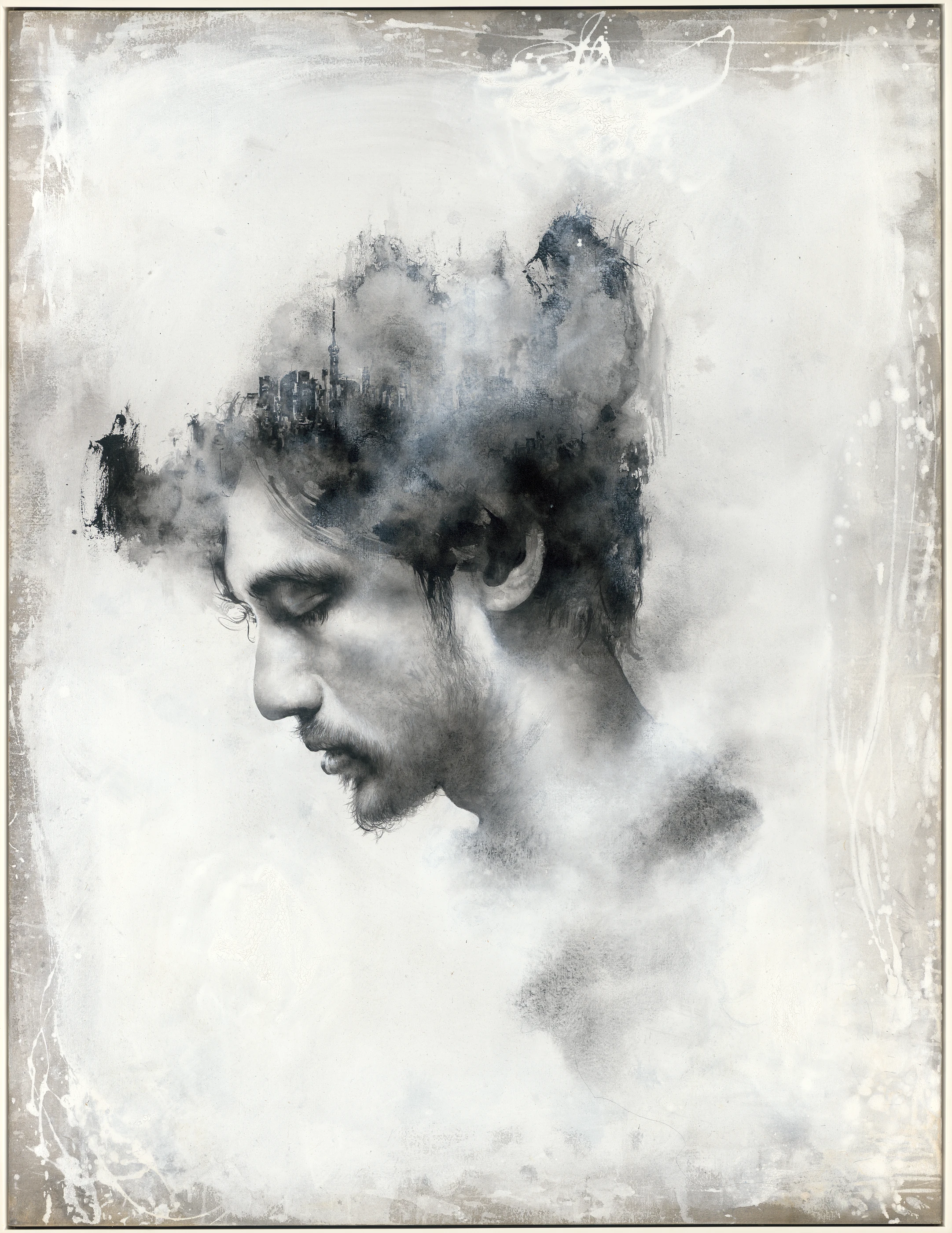
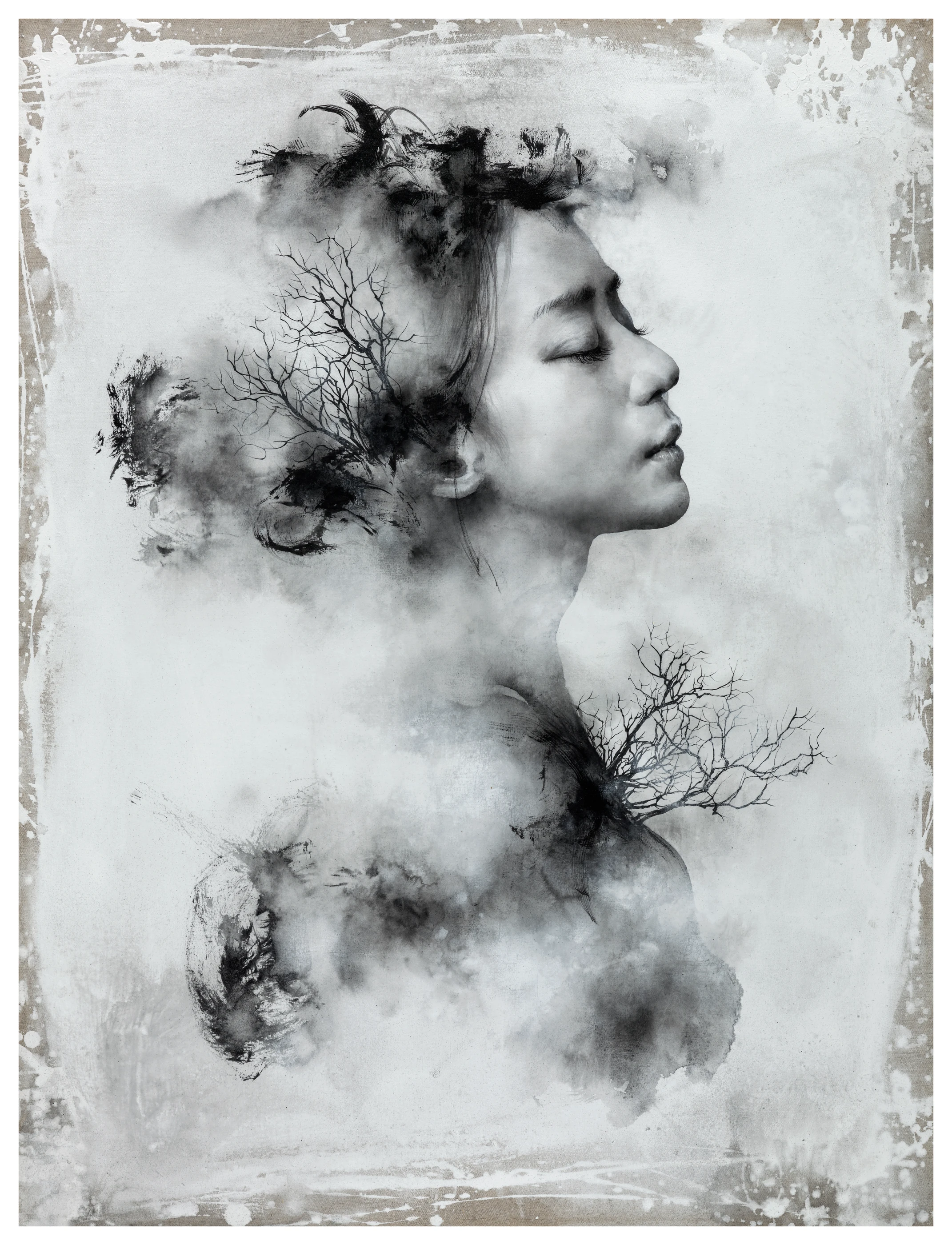
If a single watershed had to be named across twenty years, it is "Ink Storm." Here Lo Chan Peng turns the outward gaze entirely inward, and his lifelong proposition is, for the first time, stated by him this plainly.
Technically, it gathers in every language that came before: it keeps the realist command of the Strawberry Generation while letting go of that conflict between the gorgeous and the horrific; it inherits the imagining of ash from "Ashen Face"; it carries on the ink and acrylic of Berlin, yet draws the explosive spatter down into a murmur. The ink hangs and curls like mist about a peak; Eastern medium and Western hand meet here, for the first time, on one surface without the least friction. But the true turn is in the direction of the gaze — the Moses, Joshua, David, Paul and Jesus he paints are no illustration of scripture, nor a likeness of their faces, but the moment they "appeared" to him in stilled, inward contemplation; the image of the mind takes the place of the image of the thing.
And the sentence he utters here is the very core of the whole body of work: the real and the illusory invert — the objective object is only a delusive appearance, and subjective consciousness alone stands forth as the real. In other words, the outer "reality" we take for solid is false; the truth is within, in consciousness, in what cannot be verified from outside. From the Strawberry Generation to the Wanderer, he had been peeling the outer wrappings; in "Ink Storm" he simply inverts the whole coordinate — moving "the real" from the outside to the within.
This is the most important threshold he crosses: between thing and mind, outer and inner, visible and invisible. From here on, what he peels is no longer a generation's garment, but the far larger wrappings of history, faith and death; the entire inward, upward turn of the latter half of the master essay begins at this ridge.