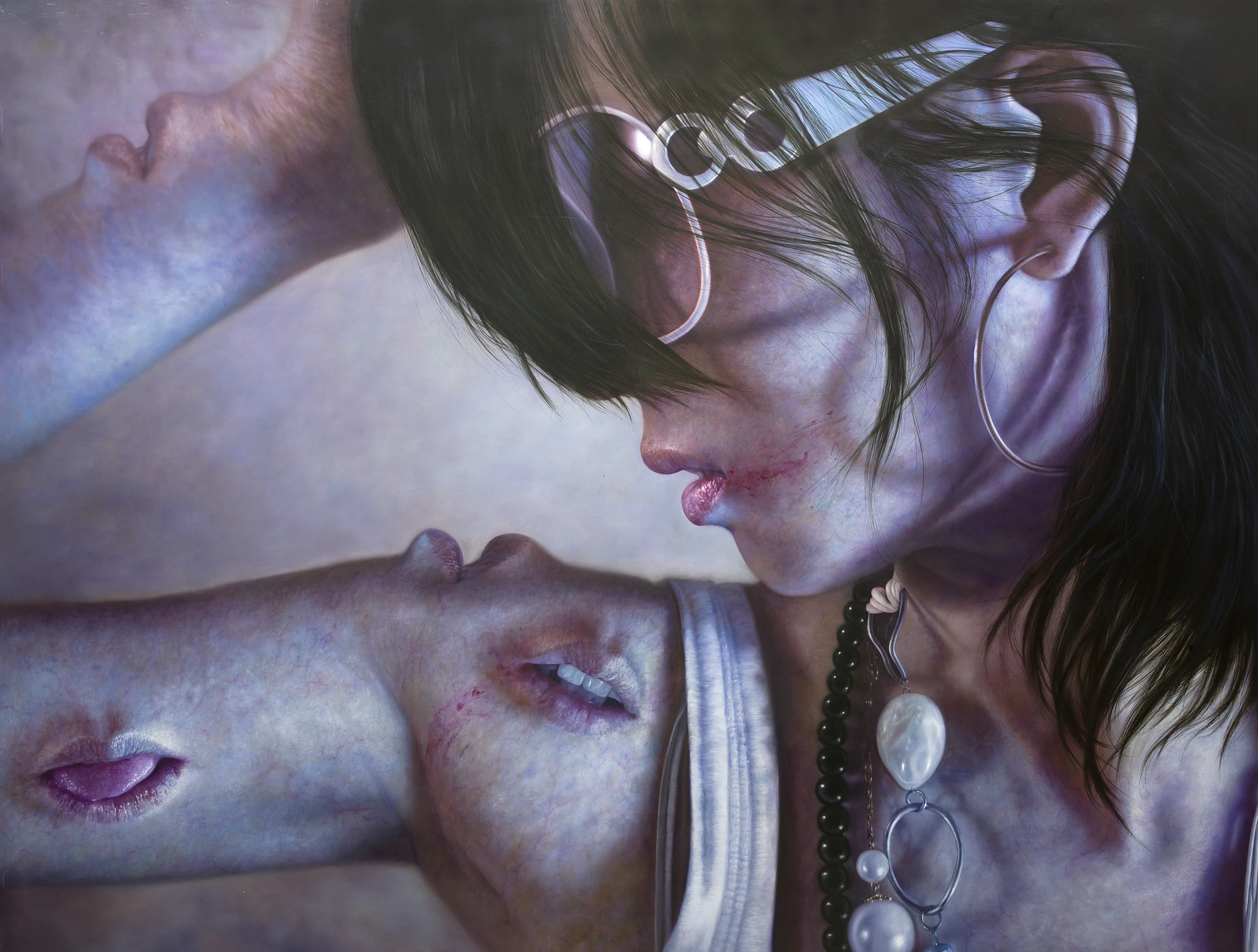
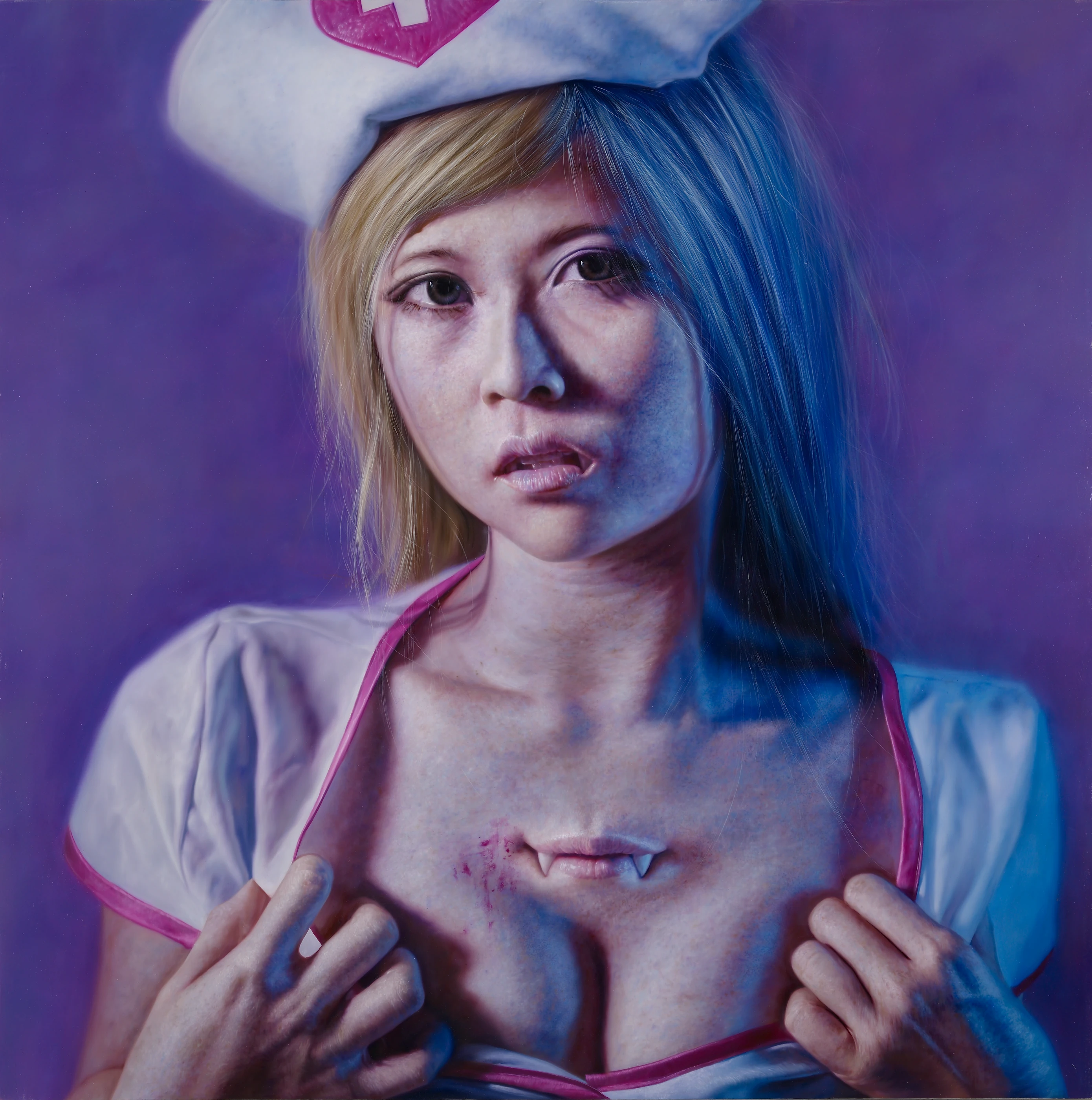
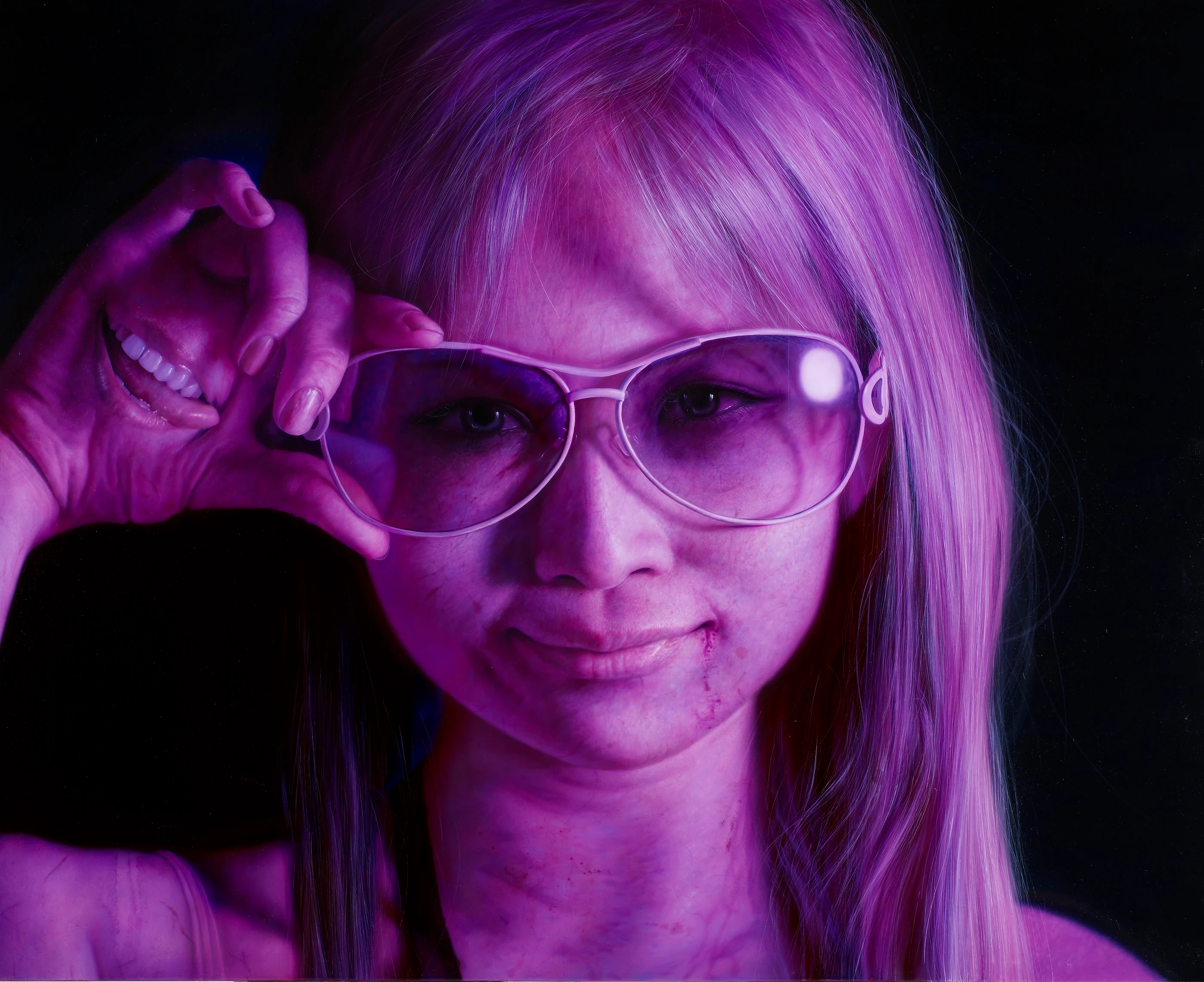
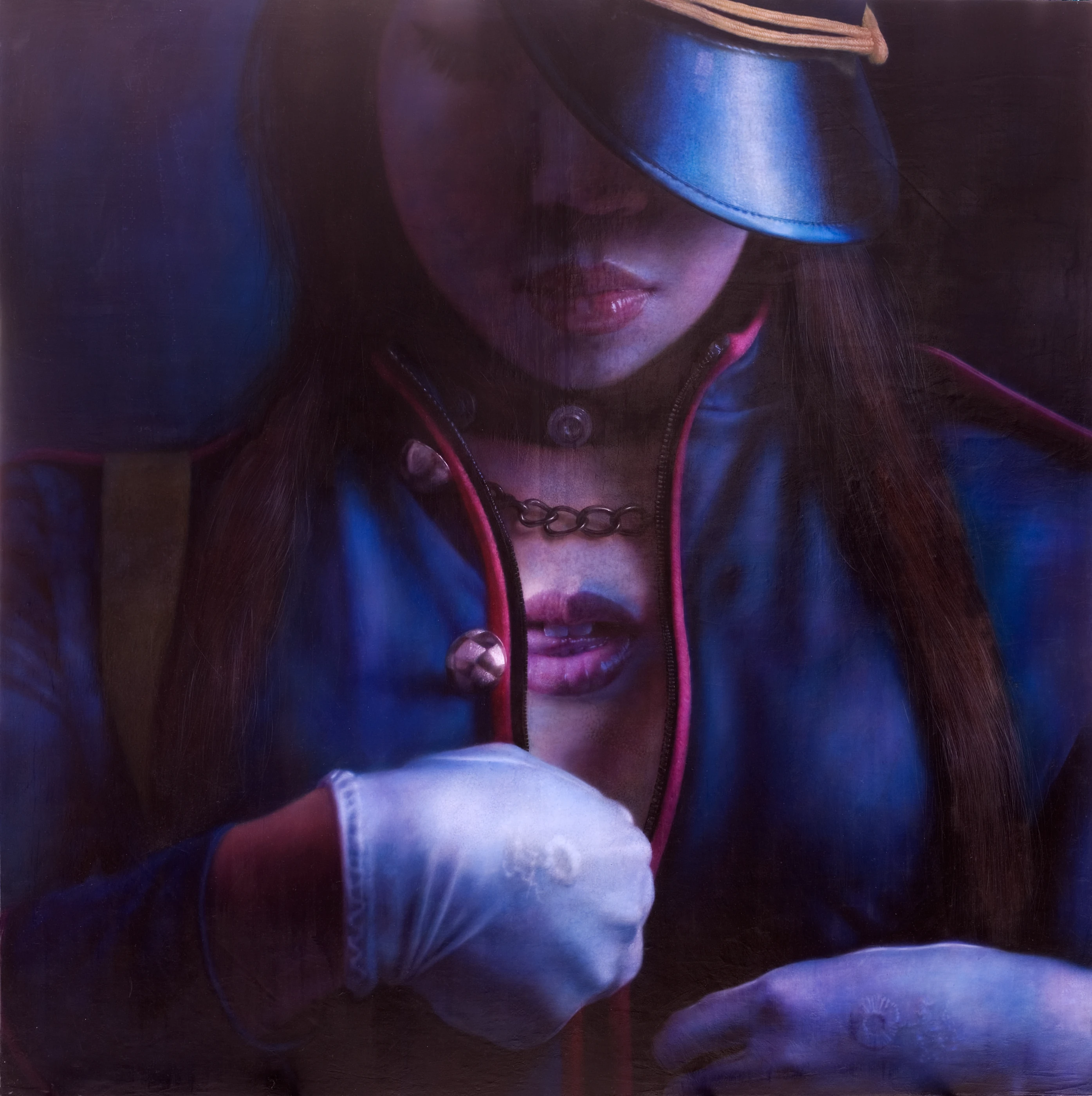
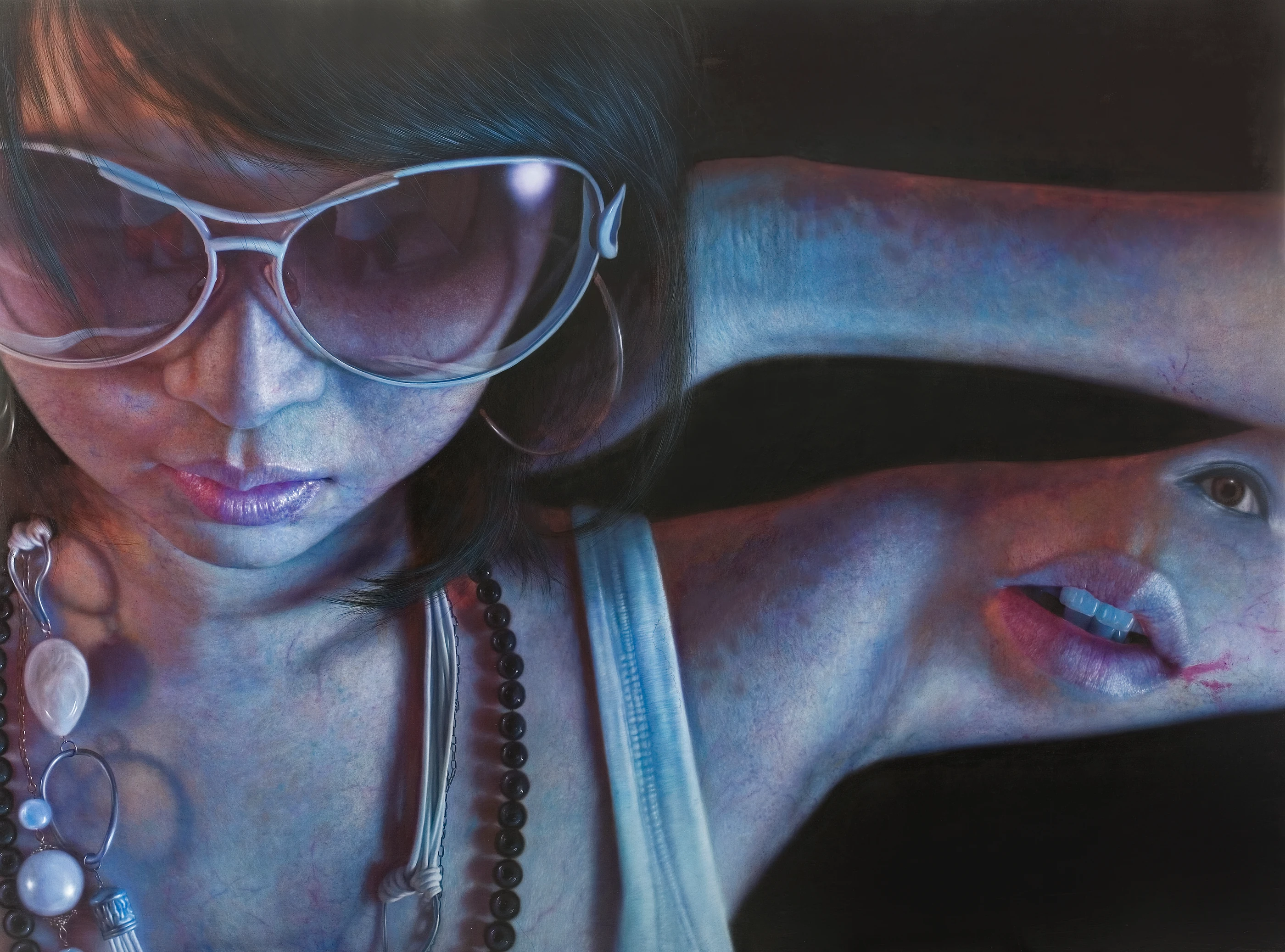
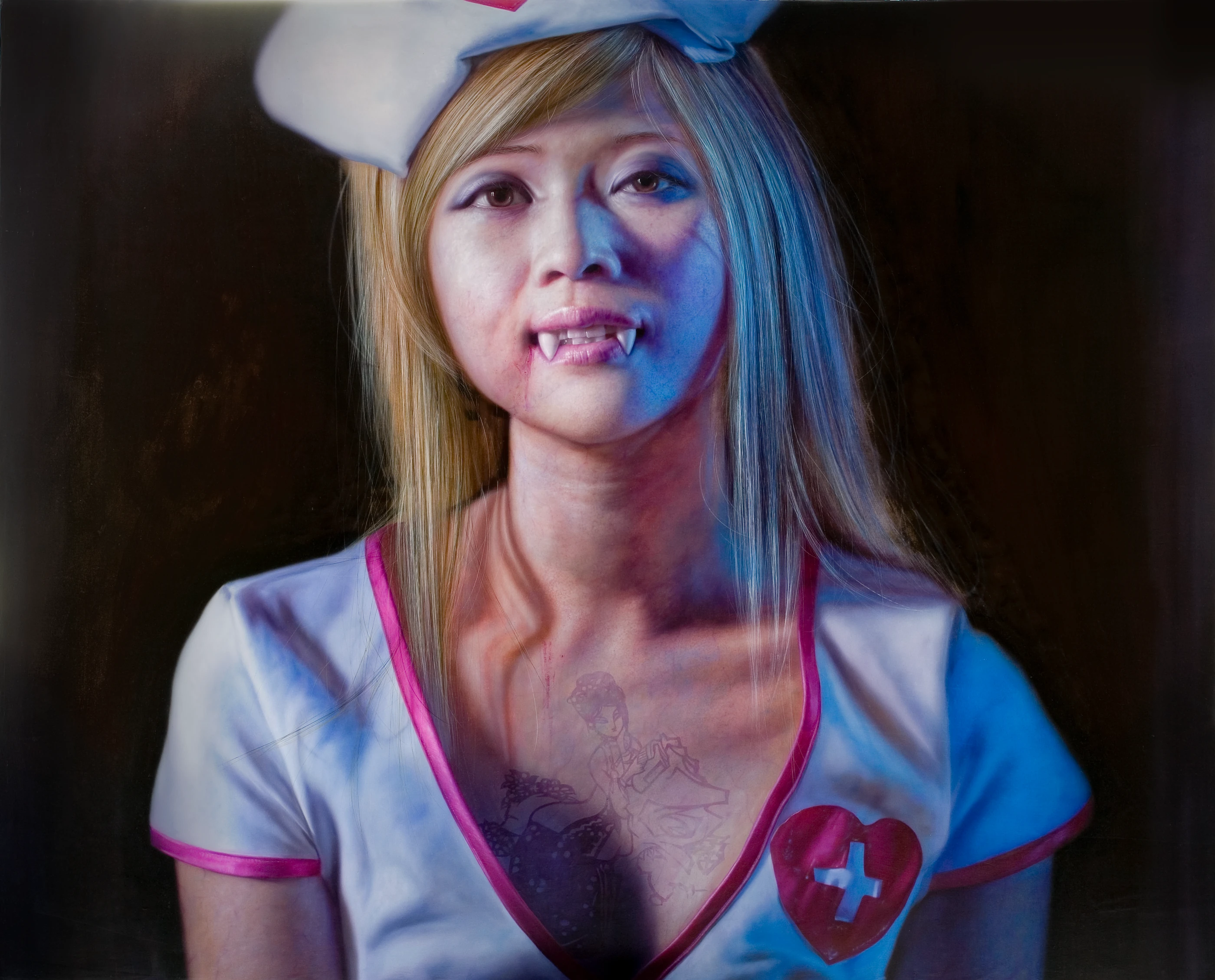
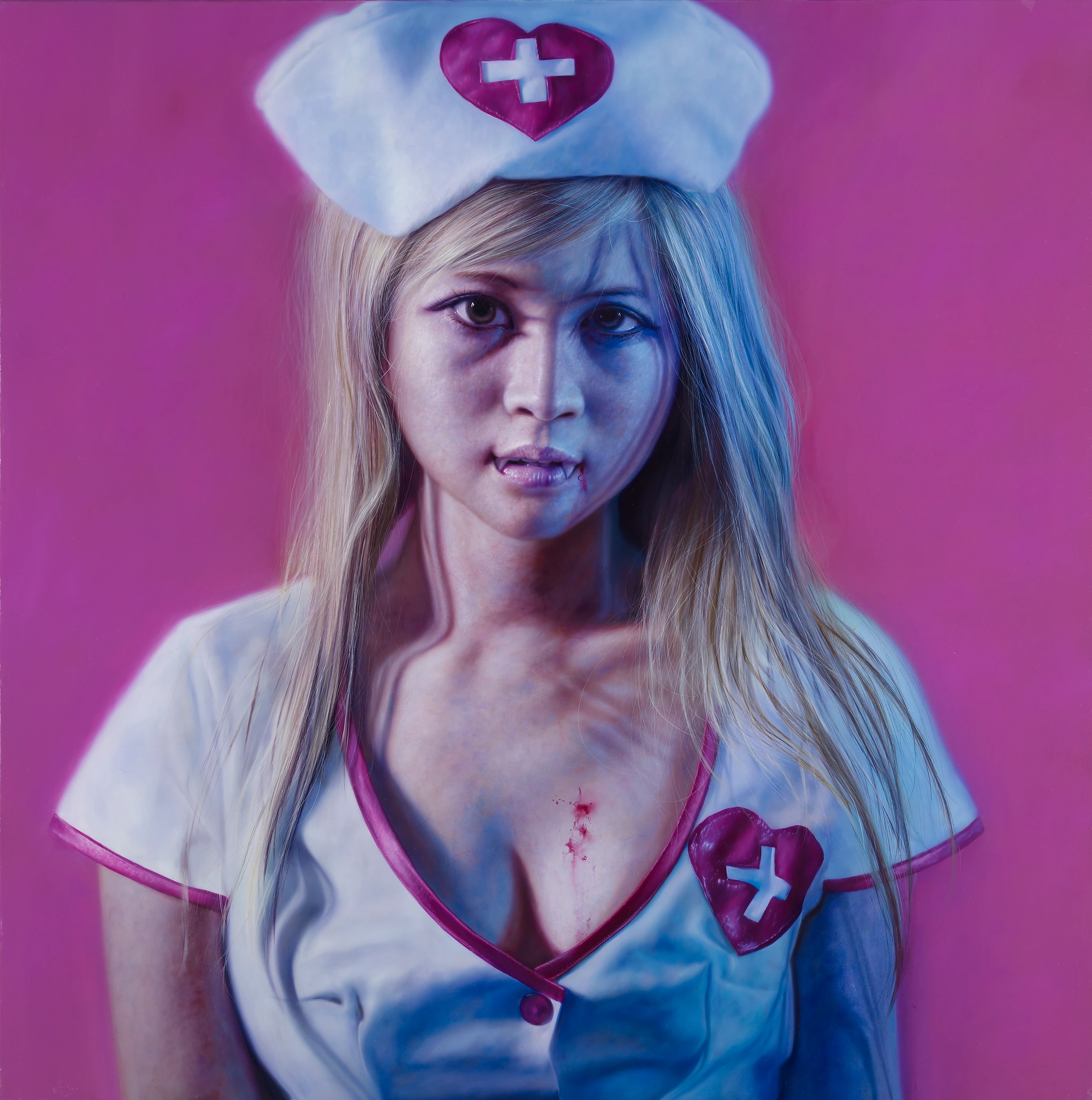
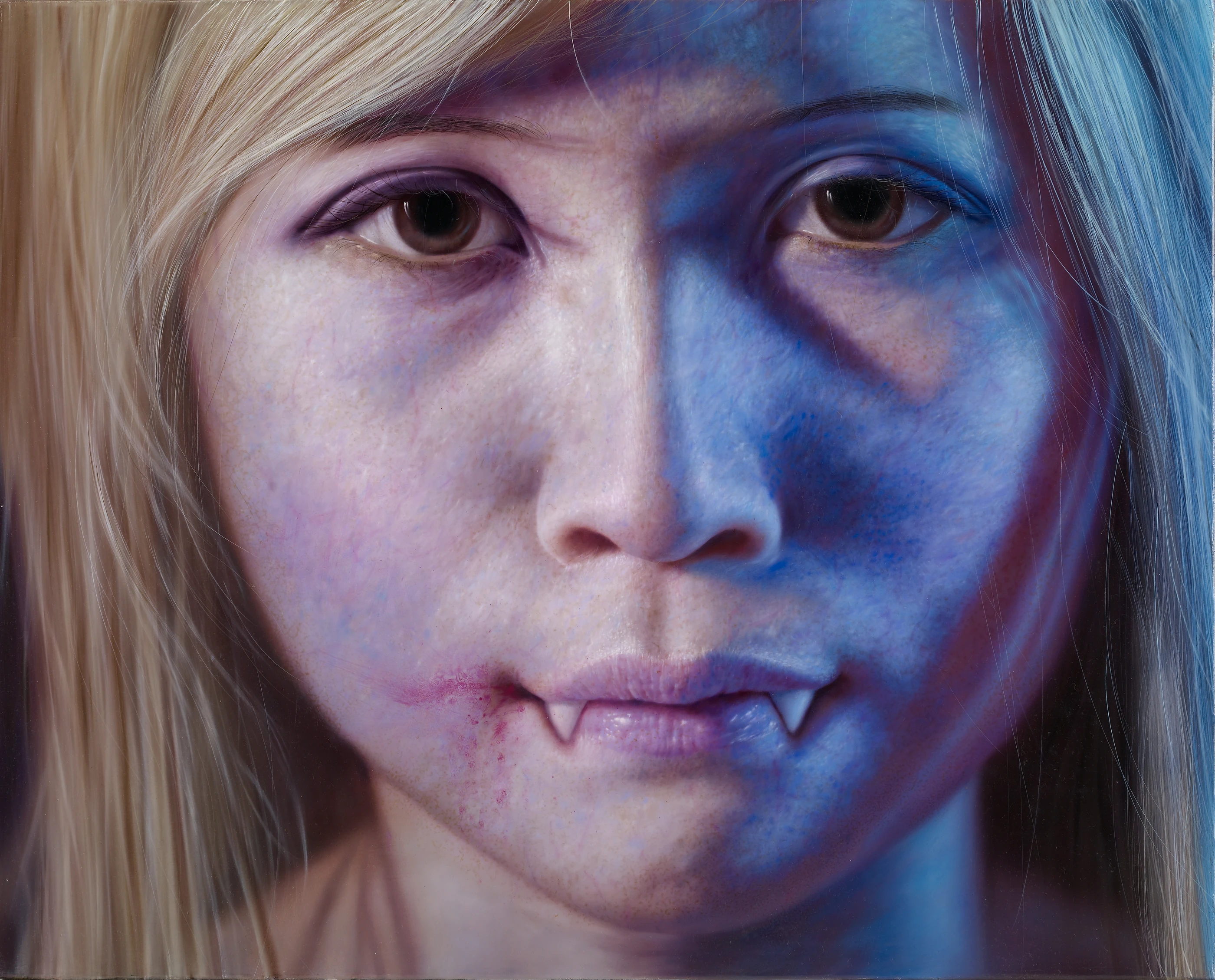
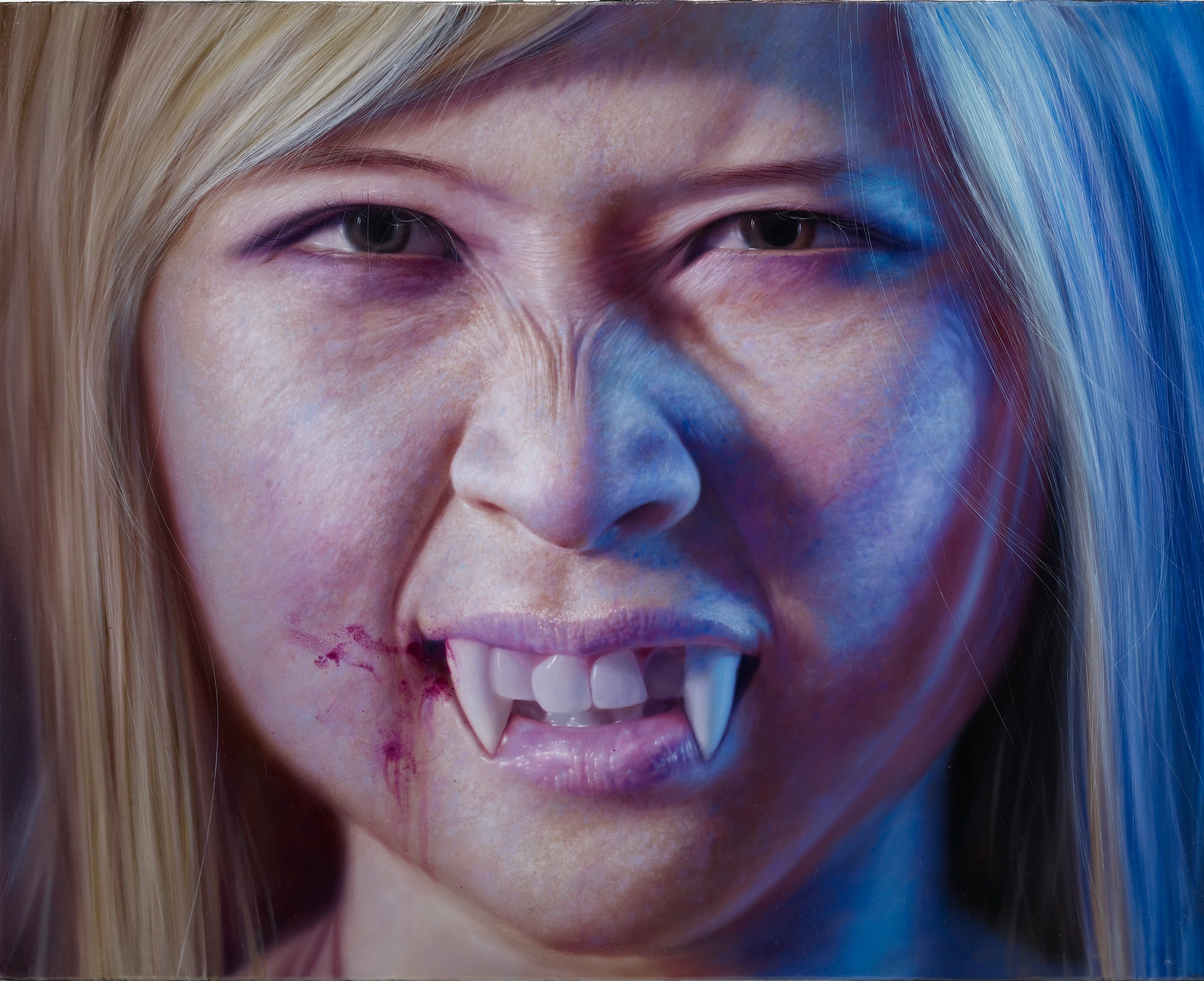
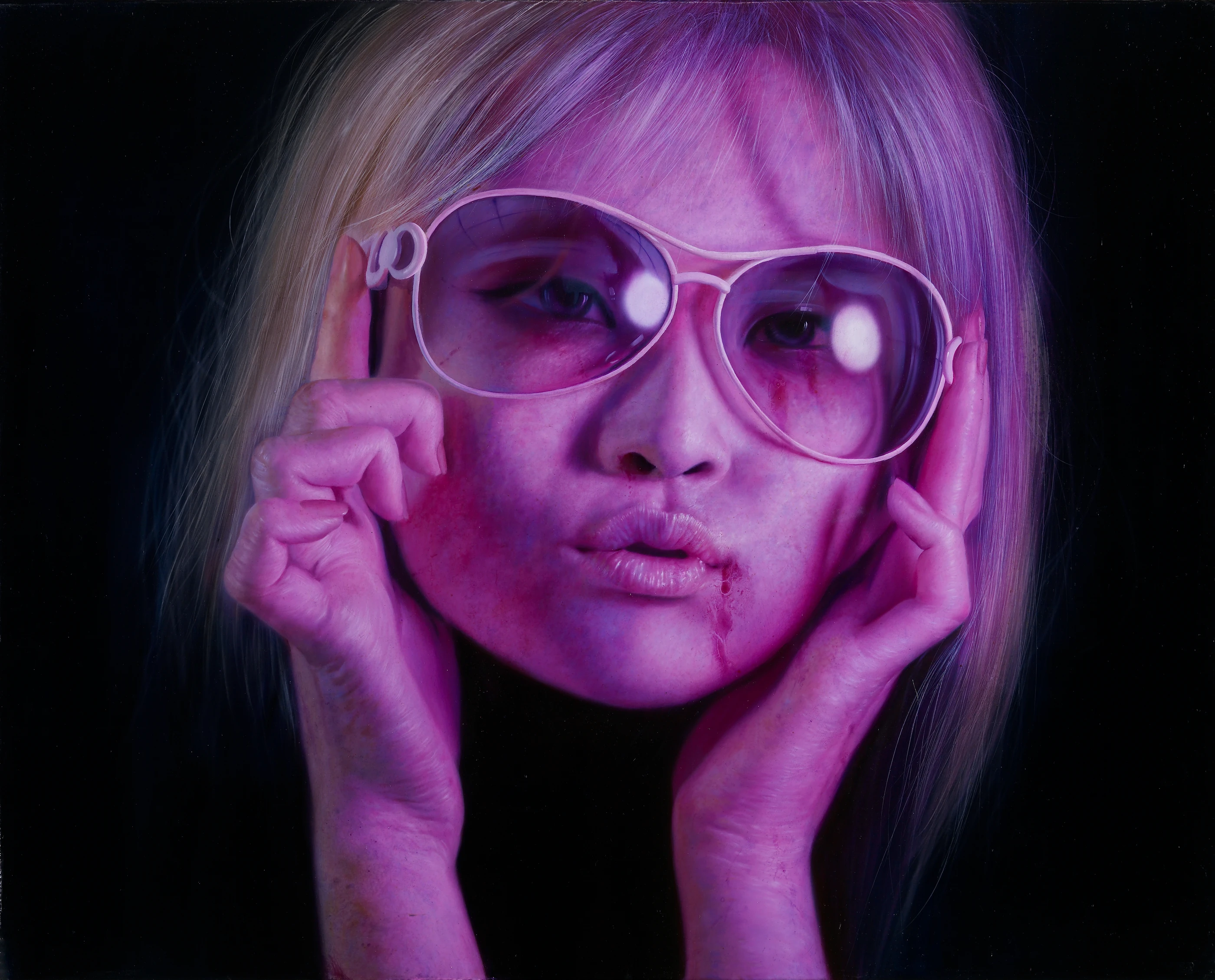
The allusion comes from Japanese legend — the night parade of a hundred demons that walks the summer dark. But what truly unsettles is that this time Lo Chan Peng no longer works by metaphor; he paints the mutation directly onto the body. The thing hidden beneath the surface in the earlier series at last breaks through the skin and grows out.
Before this, the Strawberry series used contrast to hint: beneath a splendid exterior, anxiety. In "The Night Marching" the reticence is gone, replaced by a strange and startling directness — on the girls' youthful flesh grow all manner of faintly "expressive" mouths and eyes; in *The Two-Mouthed Woman*, a seductively dressed girl bears, on her unbuttoned chest, a second mouth, half-open, alluring. These organs should not be there, and yet seem always to have been.
What they say is something utterly ordinary: each of us uses a seemingly normal surface — make-up, or a way of thinking — to press down another self, disciplined into silence by society, not permitted to appear. This is the deepest wrapping of all: not the one others put on us, but the one we put on ourselves and take for truth. The demons were never outside; they dwell within us, held down by decorum in the day, daring to file out only at night.
So this is the furthest the Strawberry series pushes the act of peeling — when society's garment is torn open, what shows beneath is not ugliness but a truth too long suppressed. Those half-human, half-spectral bodies stand on the threshold between "still human" and "already other." And this act — the suppressed truth at last appearing — will not end with the Strawberry Generation: soon, in "Ashen Face," it will shed all its lurid colour and sink into pale, silent faces. There, what Lo peels will no longer be the garment society dresses a generation in, but a deeper, quieter wrapping — emotion itself.