


10 May. 2024

Lo Chan Peng's Da Vinci Training Method(English|日本語|Español|Italiano|ภาษาไทย))Difficulty: ▮▮▮▯▯▯ $100USD
Now available with multilingual subtitles:
English|日本語|Español|Italiano|ภาษาไทย
https://youtu.be/m0H0kpjStfg
Why is the UK putting art back at the core of its national curriculum? Because in the age of AI, when computation, logic, and data can be replaced by machines, creativity and human touch remain the most valuable qualities. Those who can still bring creativity to their work with their hands will hold the highest value in this world.
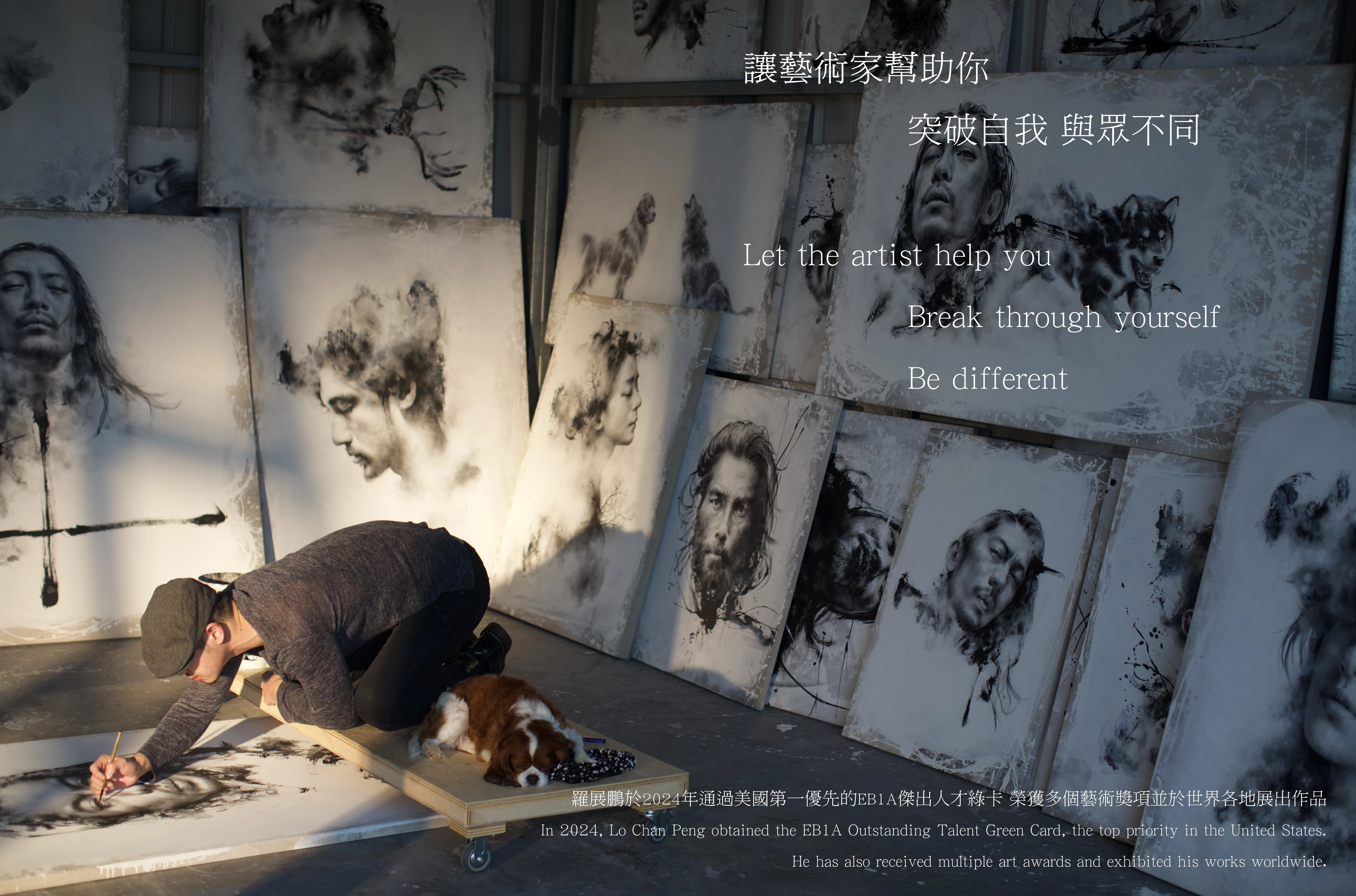
I’m Lo Chan Peng. With these hands, I’ve built a career in the arts that has been recognized by the U.S. federal government as demonstrating “Extraordinary Ability” (EB-1A). My works have been permanently collected by the Hoki Museum in Japan, ESMoA in the United States, and a historic institution in Italy. Here’s the biggest regret I have as a teacher: students put in great effort when drawing, yet their portraits remain like inflatable dolls—the skin is smooth, but the figure is hollow; the features are precise, but they seem “pasted on” to the surface. My Da Vinci Training Method teaches people how to truly see things, just as the master did: to understand anatomy like a doctor, to structure things like an architect, and to turn complex anatomical details into something intuitive through my unique memory-based approach. Mandarin audio with English subtitles.
Fully English-subtitled – and not machine-generated. Each lesson is professionally translated, with artistic terminology like anatomy, structure, value, and technique being handled accurately. The subtitles are reviewed line by line to ensure the text reads naturally in English. Check the quality of the subtitles before enrolling:
Watch the English subtitle preview ▶ https://www.youtube.com/watch?v=YnwzSkVlcUk
Basic Oil Painting Knowledge and Canvas Preparation: https://lochanpeng.com/course/17
Three Major Traditional Oil Painting Techniques: https://lochanpeng.com/course/21
The Secrets of Lo Chan Peng: https://lochanpeng.com/course/23
Lo Chan Peng’s Da Vinci Training Method focuses on facial structure, skull anatomy, muscle groups, and the ability to see beyond the surface details of a portrait. It’s designed for those who want to understand why a portrait appears “lifelike,” rather than merely being a copy of the original.
Within the Lo Chan Peng Painting System, this course falls under the more advanced discipline of “structural seeing” – the ability to interpret a face as an arrangement of underlying forces, rather than merely visible features.
English|日本語|Español|Italiano|ภาษาไทย
https://youtu.be/m0H0kpjStfg
Why is the UK putting art back at the core of its national curriculum? Because in the age of AI, when computation, logic, and data can be replaced by machines, creativity and human touch remain the most valuable qualities. Those who can still bring creativity to their work with their hands will hold the highest value in this world.
I’m Lo Chan Peng. With these hands, I’ve built a career in the arts that has been recognized by the U.S. federal government as demonstrating “Extraordinary Ability” (EB-1A). My works have been permanently collected by the Hoki Museum in Japan, ESMoA in the United States, and a historic institution in Italy. Here’s the biggest regret I have as a teacher: students put in great effort when drawing, yet their portraits remain like inflatable dolls—the skin is smooth, but the figure is hollow; the features are precise, but they seem “pasted on” to the surface. My Da Vinci Training Method teaches people how to truly see things, just as the master did: to understand anatomy like a doctor, to structure things like an architect, and to turn complex anatomical details into something intuitive through my unique memory-based approach. Mandarin audio with English subtitles.
Fully English-subtitled – and not machine-generated. Each lesson is professionally translated, with artistic terminology like anatomy, structure, value, and technique being handled accurately. The subtitles are reviewed line by line to ensure the text reads naturally in English. Check the quality of the subtitles before enrolling:
Watch the English subtitle preview ▶ https://www.youtube.com/watch?v=YnwzSkVlcUk
Basic Oil Painting Knowledge and Canvas Preparation: https://lochanpeng.com/course/17
Three Major Traditional Oil Painting Techniques: https://lochanpeng.com/course/21
The Secrets of Lo Chan Peng: https://lochanpeng.com/course/23
Lo Chan Peng’s Da Vinci Training Method focuses on facial structure, skull anatomy, muscle groups, and the ability to see beyond the surface details of a portrait. It’s designed for those who want to understand why a portrait appears “lifelike,” rather than merely being a copy of the original.
Within the Lo Chan Peng Painting System, this course falls under the more advanced discipline of “structural seeing” – the ability to interpret a face as an arrangement of underlying forces, rather than merely visible features.
20 Oct. 2021

Three Major Traditional Oil Painting Techniques ((English|日本語|Español|Italiano|ภาษาไทย)) Difficulty: ▮▮▮▮▮▯ $149USD
Subtitled in five languages — English, 日本語, Español, Italiano, ภาษาไทย — and not machine-generated. Every lesson was professionally translated with the painting vocabulary handled correctly in each language and reviewed line by line. See the subtitle quality:
▶ Multilingual sample: https://www.youtube.com/watch?v=m0H0kpjStfg
▶ English lesson preview: https://youtu.be/7n5BnRvBZGg
▶ Basic Rules: https://www.youtube.com/watch?v=AP9v3YNeAmo
---
Now available with multilingual subtitles: English | 日本語 | Español | Italiano | ภาษาไทย
Three classical techniques separate painters who merely copy an effect from painters who truly command it: glazing, layered painting, and alla prima. Most people only learn what they look like, then apply them mechanically — and the picture stays flat. None of them is a surface trick; each carries its own rhythm, its own material logic, and its own way of making decisions.
Lo Chan Peng — an internationally exhibiting artist, recognized by the U.S. federal government as having "Extraordinary Ability" (EB-1A), with work collected by museums in Japan, the United States, and Italy — guides you across the bridge from material knowledge to pictorial strategy.
Three Major Traditional Oil Painting Techniques is a foundational oil painting course within the Lo Chan Peng Painting System. Through complete demonstrations, Lo Chan Peng shows how transparent glazing, layer-by-layer construction, and direct wet-into-wet painting each shape the final image. Students will understand how these methods affect value structure, opacity, luminosity, correction, surface control, pictorial depth, and the painter's relationship with time. The goal is not to mechanically copy classical technique, but to understand the principles deeply enough to use them freely in your own future work.
This course is suited to students who already have basic drawing or oil painting experience and want a clearer system for entering classical oil painting methods.
Course content includes:
- An overview of oil painting materials
- Basic working rules and studio workflow
- Glazing, Part 1
- Glazing, Part 2
- Layered Painting, Part 1
- Layered Painting, Part 2
- Alla Prima / Direct Painting
- Reference photos and Lo Chan Peng's oil paint pigment list
- A bonus monologue for students who feel discouraged or disheartened on the painting path
Continue the Study:
Once you understand the three traditional oil painting methods, technique can open into a more complete pictorial strategy. The Secrets of Lo Chan Peng extends into glazing, surface, skin, hair, and long-form painting judgment:
https://lochanpeng.com/course/23
▶ Multilingual sample: https://www.youtube.com/watch?v=m0H0kpjStfg
▶ English lesson preview: https://youtu.be/7n5BnRvBZGg
▶ Basic Rules: https://www.youtube.com/watch?v=AP9v3YNeAmo
---
Now available with multilingual subtitles: English | 日本語 | Español | Italiano | ภาษาไทย
Three classical techniques separate painters who merely copy an effect from painters who truly command it: glazing, layered painting, and alla prima. Most people only learn what they look like, then apply them mechanically — and the picture stays flat. None of them is a surface trick; each carries its own rhythm, its own material logic, and its own way of making decisions.
Lo Chan Peng — an internationally exhibiting artist, recognized by the U.S. federal government as having "Extraordinary Ability" (EB-1A), with work collected by museums in Japan, the United States, and Italy — guides you across the bridge from material knowledge to pictorial strategy.
Three Major Traditional Oil Painting Techniques is a foundational oil painting course within the Lo Chan Peng Painting System. Through complete demonstrations, Lo Chan Peng shows how transparent glazing, layer-by-layer construction, and direct wet-into-wet painting each shape the final image. Students will understand how these methods affect value structure, opacity, luminosity, correction, surface control, pictorial depth, and the painter's relationship with time. The goal is not to mechanically copy classical technique, but to understand the principles deeply enough to use them freely in your own future work.
This course is suited to students who already have basic drawing or oil painting experience and want a clearer system for entering classical oil painting methods.
Course content includes:
- An overview of oil painting materials
- Basic working rules and studio workflow
- Glazing, Part 1
- Glazing, Part 2
- Layered Painting, Part 1
- Layered Painting, Part 2
- Alla Prima / Direct Painting
- Reference photos and Lo Chan Peng's oil paint pigment list
- A bonus monologue for students who feel discouraged or disheartened on the painting path
Continue the Study:
Once you understand the three traditional oil painting methods, technique can open into a more complete pictorial strategy. The Secrets of Lo Chan Peng extends into glazing, surface, skin, hair, and long-form painting judgment:
https://lochanpeng.com/course/23
26 Sept. 2021

Basic Oil Painting Knowledge and Canvas Preparation ((English|日本語|Español|Italiano|ภาษาไทย)) Difficulty:▮▮▯▯▯▯ $69USD
Subtitled in five languages — English, 日本語, Español, Italiano, ภาษาไทย — and not machine-generated. Every lesson was professionally translated with the painting vocabulary handled correctly in each language and reviewed line by line. See the subtitle quality:
▶ Multilingual sample: https://www.youtube.com/watch?v=m0H0kpjStfg
▶ English lesson preview: https://youtu.be/7n5BnRvBZGg
▶ Basic Rules: https://www.youtube.com/watch?v=AP9v3YNeAmo
---
Now available with multilingual subtitles: English | 日本語 | Español | Italiano | ภาษาไทย
Basic Oil Painting Knowledge and Canvas Preparation is the material foundation of the Lo Chan Peng Painting System. It is designed for students who want to understand how canvas, ground, paint, and time shape the final image before moving into more advanced pictorial methods.
The course introduces oil painting materials, color theory, canvas preparation, water-based ground, oil ground, and the basic working rules that govern how oil paint behaves over time. Many problems that appear later in a painting begin much earlier: with the wrong surface, an unclear material choice, or a misunderstanding of how paint, absorbency, and layering interact.
This course gives students a more disciplined beginning. Instead of treating materials as accessories, it teaches them as the first structure of the painting itself.
Subtitled in five languages — English, 日本語, Español, Italiano, ภาษาไทย — and not machine-generated. Every lesson was professionally translated with the painting vocabulary handled correctly in each language and reviewed line by line. See the subtitle quality: ▶ multilingual sample https://www.youtube.com/watch?v=m0H0kpjStfg
Mandarin Chinese audio with subtitles in English, 日本語, Español, Italiano, and ภาษาไทย.
Course Preview Videos:
[https://youtu.be/SdnZV9IaaLA](https://youtu.be/SdnZV9IaaLA)
[https://youtu.be/NowyNMow4vw](https://youtu.be/NowyNMow4vw)
Continue the Study:
Once students understand the material foundation, the next question is how oil paint can be organized into distinct pictorial methods. Continue with Three Major Traditional Oil Painting Techniques to study painting in layers, glazing, and alla prima:
[https://lochanpeng.com/course/21](https://lochanpeng.com/course/21)
Basic Oil Painting Knowledge
Overview of Oil Painting Materials — 44 min
This lesson provides a comprehensive introduction to the materials used by Lo Chan Peng and their characteristics. It brings the study of oil painting materials into the course, helping students understand the complexity of oil painting media and the role each material plays within the painting process.
Color Theory — 31 min
This lesson introduces the principles of color, together with Lo Chan Peng’s own perspective on color. Understanding hue, value, chroma, and color relationships will help students apply this knowledge to the traditional painting techniques introduced later in the course.
Introduction to the Three Major Traditional Oil Painting Techniques — 7 min
This lesson introduces the basic logic and historical context of three major traditional oil painting techniques: painting in layers, glazing, and alla prima. It helps students understand the fundamental concepts behind each method before entering more advanced technical practice.
Training Objective:
To understand the fundamental materials, color theory, and general principles behind the three major traditional oil painting techniques.
Recommended For:
Students with no prior foundation, or students who only have a limited understanding of oil painting.
Difficulty: ▮▯▯▯▯▯
Duration: 44 min, 31 min, 7 min
Canvas Preparation
Training Objective:
Store-bought canvases cannot always be fully tailored to your own pictorial needs. Through Lo Chan Peng’s instruction, students will learn how to make a canvas from the beginning and prepare a painting surface designed specifically for their own work. This is the first step toward becoming a professional painter.
Recommended For:
Students who already have a basic understanding of oil painting materials and color theory, and are ready to begin painting in oil.
Difficulty: ▮▮▯▯▯▯
Duration: 39 min, 36 min, 31 min
Content:
Canvas Preparation — 39 min
By making your own canvas, you will gain a deeper understanding of the materials themselves and learn how to create more subtle surface and textural variations in oil painting.
Water-Based Ground — 36 min
Water-based ground is an essential part of canvas preparation. Lo Chan Peng shares the method he has developed, allowing students to complete this step in a simple, practical, and reliable way.
Oil Ground — 31 min
This lesson introduces why oil ground is necessary, what it means within the painting process, and how the choice of ground color can affect the final work.
▶ Multilingual sample: https://www.youtube.com/watch?v=m0H0kpjStfg
▶ English lesson preview: https://youtu.be/7n5BnRvBZGg
▶ Basic Rules: https://www.youtube.com/watch?v=AP9v3YNeAmo
---
Now available with multilingual subtitles: English | 日本語 | Español | Italiano | ภาษาไทย
Basic Oil Painting Knowledge and Canvas Preparation is the material foundation of the Lo Chan Peng Painting System. It is designed for students who want to understand how canvas, ground, paint, and time shape the final image before moving into more advanced pictorial methods.
The course introduces oil painting materials, color theory, canvas preparation, water-based ground, oil ground, and the basic working rules that govern how oil paint behaves over time. Many problems that appear later in a painting begin much earlier: with the wrong surface, an unclear material choice, or a misunderstanding of how paint, absorbency, and layering interact.
This course gives students a more disciplined beginning. Instead of treating materials as accessories, it teaches them as the first structure of the painting itself.
Subtitled in five languages — English, 日本語, Español, Italiano, ภาษาไทย — and not machine-generated. Every lesson was professionally translated with the painting vocabulary handled correctly in each language and reviewed line by line. See the subtitle quality: ▶ multilingual sample https://www.youtube.com/watch?v=m0H0kpjStfg
Mandarin Chinese audio with subtitles in English, 日本語, Español, Italiano, and ภาษาไทย.
Course Preview Videos:
[https://youtu.be/SdnZV9IaaLA](https://youtu.be/SdnZV9IaaLA)
[https://youtu.be/NowyNMow4vw](https://youtu.be/NowyNMow4vw)
Continue the Study:
Once students understand the material foundation, the next question is how oil paint can be organized into distinct pictorial methods. Continue with Three Major Traditional Oil Painting Techniques to study painting in layers, glazing, and alla prima:
[https://lochanpeng.com/course/21](https://lochanpeng.com/course/21)
Basic Oil Painting Knowledge
Overview of Oil Painting Materials — 44 min
This lesson provides a comprehensive introduction to the materials used by Lo Chan Peng and their characteristics. It brings the study of oil painting materials into the course, helping students understand the complexity of oil painting media and the role each material plays within the painting process.
Color Theory — 31 min
This lesson introduces the principles of color, together with Lo Chan Peng’s own perspective on color. Understanding hue, value, chroma, and color relationships will help students apply this knowledge to the traditional painting techniques introduced later in the course.
Introduction to the Three Major Traditional Oil Painting Techniques — 7 min
This lesson introduces the basic logic and historical context of three major traditional oil painting techniques: painting in layers, glazing, and alla prima. It helps students understand the fundamental concepts behind each method before entering more advanced technical practice.
Training Objective:
To understand the fundamental materials, color theory, and general principles behind the three major traditional oil painting techniques.
Recommended For:
Students with no prior foundation, or students who only have a limited understanding of oil painting.
Difficulty: ▮▯▯▯▯▯
Duration: 44 min, 31 min, 7 min
Canvas Preparation
Training Objective:
Store-bought canvases cannot always be fully tailored to your own pictorial needs. Through Lo Chan Peng’s instruction, students will learn how to make a canvas from the beginning and prepare a painting surface designed specifically for their own work. This is the first step toward becoming a professional painter.
Recommended For:
Students who already have a basic understanding of oil painting materials and color theory, and are ready to begin painting in oil.
Difficulty: ▮▮▯▯▯▯
Duration: 39 min, 36 min, 31 min
Content:
Canvas Preparation — 39 min
By making your own canvas, you will gain a deeper understanding of the materials themselves and learn how to create more subtle surface and textural variations in oil painting.
Water-Based Ground — 36 min
Water-based ground is an essential part of canvas preparation. Lo Chan Peng shares the method he has developed, allowing students to complete this step in a simple, practical, and reliable way.
Oil Ground — 31 min
This lesson introduces why oil ground is necessary, what it means within the painting process, and how the choice of ground color can affect the final work.
24 July. 2022

Realistic Portrait Drawing ((English|日本語|Español|Italiano|ภาษาไทย)) Difficulty: ▮▮▮▯▯▯ $95USD
Now available with multilingual subtitles:
English|日本語|Español|Italiano|ภาษาไทย
https://youtu.be/m0H0kpjStfg
--
This is a foundational portrait drawing course centered on understanding. Beginning with geometric forms, light and shadow, the skull, muscles and fat, facial features, hair, and the emotions and expressions of the figure, the course gradually builds a complete ability to draw portraits.
In Lo Chan Peng’s painting system, a portrait is not merely a combination of facial features. It is an integrated whole formed by structure, volume, expression, and psychological presence. This course will guide students in learning how to truly understand a face: how the bones support the form, how muscles and fat affect the surface, how light and shadow describe volume, and how emotion gives the figure a sense of life on the page.
This is not only a course in drawing technique, but a complete system for training the way we see. Now, with subtitles in English, 日本語, Español, Italiano, and ภาษาไทย, this course is officially open to more international students.
Introduction:
Drawing is the foundation of all visual arts.
Your creative medium may be digital painting, watercolor, oil painting, acrylic, colored pencil, or any other form. But if you want to create truly convincing work, you cannot separate yourself from the foundation of drawing. This is especially true for portraits, where the complexity of structure reveals an artist’s powers of observation, form-building ability, and visual judgment with absolute clarity.
Have you ever encountered these challenges in your creative process?
You want to understand facial proportions more accurately.
You want to draw the posture and presence of the figure more vividly.
You want to handle complex hair in a more natural way.
You want to capture a person’s emotion and expression.
You want your work to be more than a likeness — you want it to feel truly alive.
No matter what stage you are currently in, or what bottleneck you are facing, returning to drawing practice is always the key to elevating your creative level.
Follow internationally recognized contemporary realist artist Lo Chan Peng and rediscover the essence of portrait drawing.
Lo Chan Peng is an internationally recognized Taiwanese contemporary artist known for his realist portrait painting. His works are vivid and lifelike, creating a pure and profound visual atmosphere. He has a remarkable ability to capture the emotions and inner states of his subjects, giving his paintings a quietly immersive power. He is regarded as a highly acclaimed master of contemporary realist portrait painting.
Teacher Lo says:
Painting is a fascinating act. With only the simplest materials and one quiet afternoon, you can create a period of time in dialogue with yourself.
To complete a painting from nothing is an immersive experience, and it is also part of my daily life. To me, this is a beauty I cannot stop pursuing. I hope to share this process with you through this course.
Course Content:
Materials Introduction
1. Pencil Drawing Materials and Basic Concepts — 23:04
Unit One: The Three Fundamental Forms of Visual Art|Basic Concepts of Drawing
2. Geometric Forms — Introduction — 04:34
3. Drawing the Cube — 18:57
4. Drawing the Sphere — 23:46
5. Drawing the Cylinder — 22:22
Unit Two: The Light-Shadow Transition|The Key to Figurative Painting
6. In-Depth Analysis of the Light-Shadow Transition — 25:12
Unit Three: Skull Structure|The Key to Portrait Form
7. Introduction to the Structure from the Top of the Head to the Chin — 21:44
8. Analysis of Skeletal Structure — 27:03
9. Drawing a Skull — 53:09
Unit Four: Muscles and Fat|Understanding Facial Movement
10. Distribution of Muscles and Fat — 18:35
11. The Movement and Function of Each Muscle Group — 16:17
Unit Five: Detailed Drawing of the Facial Features|Connecting External Features|Integrated Course Practice
12. Complete Drawing from Two Angles: Elderly Male, Part 1 — 69:01
13. Complete Drawing from Two Angles: Elderly Male, Part 2 — 51:13
14. Complete Drawing from Two Angles: Young Female, Part 1 — 52:00
15. Complete Drawing from Two Angles: Young Female, Part 2 — 54:42
16. Complete Drawing from Two Angles: Young Female, Part 3 — 54:15
Unit Six: Emotion and Expression|The Essence of Portrait Painting
17. Emotion and Expression: The Essence of Portrait Painting — 25:41
Bonus Lessons
18. Introduction to Oil Painting Tools and Studio Setup — 11:42
19. How to Apply Drawing Concepts to Oil Painting — 29:07
20. Detailed Teaching and Sharing on Oil Painting Creation — 12:38
English|日本語|Español|Italiano|ภาษาไทย
https://youtu.be/m0H0kpjStfg
--
This is a foundational portrait drawing course centered on understanding. Beginning with geometric forms, light and shadow, the skull, muscles and fat, facial features, hair, and the emotions and expressions of the figure, the course gradually builds a complete ability to draw portraits.
In Lo Chan Peng’s painting system, a portrait is not merely a combination of facial features. It is an integrated whole formed by structure, volume, expression, and psychological presence. This course will guide students in learning how to truly understand a face: how the bones support the form, how muscles and fat affect the surface, how light and shadow describe volume, and how emotion gives the figure a sense of life on the page.
This is not only a course in drawing technique, but a complete system for training the way we see. Now, with subtitles in English, 日本語, Español, Italiano, and ภาษาไทย, this course is officially open to more international students.
Introduction:
Drawing is the foundation of all visual arts.
Your creative medium may be digital painting, watercolor, oil painting, acrylic, colored pencil, or any other form. But if you want to create truly convincing work, you cannot separate yourself from the foundation of drawing. This is especially true for portraits, where the complexity of structure reveals an artist’s powers of observation, form-building ability, and visual judgment with absolute clarity.
Have you ever encountered these challenges in your creative process?
You want to understand facial proportions more accurately.
You want to draw the posture and presence of the figure more vividly.
You want to handle complex hair in a more natural way.
You want to capture a person’s emotion and expression.
You want your work to be more than a likeness — you want it to feel truly alive.
No matter what stage you are currently in, or what bottleneck you are facing, returning to drawing practice is always the key to elevating your creative level.
Follow internationally recognized contemporary realist artist Lo Chan Peng and rediscover the essence of portrait drawing.
Lo Chan Peng is an internationally recognized Taiwanese contemporary artist known for his realist portrait painting. His works are vivid and lifelike, creating a pure and profound visual atmosphere. He has a remarkable ability to capture the emotions and inner states of his subjects, giving his paintings a quietly immersive power. He is regarded as a highly acclaimed master of contemporary realist portrait painting.
Teacher Lo says:
Painting is a fascinating act. With only the simplest materials and one quiet afternoon, you can create a period of time in dialogue with yourself.
To complete a painting from nothing is an immersive experience, and it is also part of my daily life. To me, this is a beauty I cannot stop pursuing. I hope to share this process with you through this course.
Course Content:
Materials Introduction
1. Pencil Drawing Materials and Basic Concepts — 23:04
Unit One: The Three Fundamental Forms of Visual Art|Basic Concepts of Drawing
2. Geometric Forms — Introduction — 04:34
3. Drawing the Cube — 18:57
4. Drawing the Sphere — 23:46
5. Drawing the Cylinder — 22:22
Unit Two: The Light-Shadow Transition|The Key to Figurative Painting
6. In-Depth Analysis of the Light-Shadow Transition — 25:12
Unit Three: Skull Structure|The Key to Portrait Form
7. Introduction to the Structure from the Top of the Head to the Chin — 21:44
8. Analysis of Skeletal Structure — 27:03
9. Drawing a Skull — 53:09
Unit Four: Muscles and Fat|Understanding Facial Movement
10. Distribution of Muscles and Fat — 18:35
11. The Movement and Function of Each Muscle Group — 16:17
Unit Five: Detailed Drawing of the Facial Features|Connecting External Features|Integrated Course Practice
12. Complete Drawing from Two Angles: Elderly Male, Part 1 — 69:01
13. Complete Drawing from Two Angles: Elderly Male, Part 2 — 51:13
14. Complete Drawing from Two Angles: Young Female, Part 1 — 52:00
15. Complete Drawing from Two Angles: Young Female, Part 2 — 54:42
16. Complete Drawing from Two Angles: Young Female, Part 3 — 54:15
Unit Six: Emotion and Expression|The Essence of Portrait Painting
17. Emotion and Expression: The Essence of Portrait Painting — 25:41
Bonus Lessons
18. Introduction to Oil Painting Tools and Studio Setup — 11:42
19. How to Apply Drawing Concepts to Oil Painting — 29:07
20. Detailed Teaching and Sharing on Oil Painting Creation — 12:38
30 Sept. 2021

The Importance of Oil Ground in Oil Painting — Free Preview
This free preview introduces the role of oil ground in oil painting and why surface preparation affects the final image.
It is a useful starting point for students who want to understand the material foundation behind Lo Chan Peng's painting process. Oil ground is not merely a technical preparation; it influences absorbency, surface response, layering, color behavior, and the long-term stability of the painting.
Within the Lo Chan Peng Painting System, this preview opens the material side of the practice: the understanding that a painting begins before the first visible image appears.
Continue the Study:
Oil ground is part of a larger material system: surface, absorbency, layering, and the way paint behaves over time. Continue with Basic Oil Painting Knowledge and Canvas Preparation, then Three Major Traditional Oil Painting Techniques to connect material preparation with painting methods.
- Basic Oil Painting Knowledge and Canvas Preparation: https://lochanpeng.com/course/17
- Three Major Traditional Oil Painting Techniques: https://lochanpeng.com/course/21
It is a useful starting point for students who want to understand the material foundation behind Lo Chan Peng's painting process. Oil ground is not merely a technical preparation; it influences absorbency, surface response, layering, color behavior, and the long-term stability of the painting.
Within the Lo Chan Peng Painting System, this preview opens the material side of the practice: the understanding that a painting begins before the first visible image appears.
Continue the Study:
Oil ground is part of a larger material system: surface, absorbency, layering, and the way paint behaves over time. Continue with Basic Oil Painting Knowledge and Canvas Preparation, then Three Major Traditional Oil Painting Techniques to connect material preparation with painting methods.
- Basic Oil Painting Knowledge and Canvas Preparation: https://lochanpeng.com/course/17
- Three Major Traditional Oil Painting Techniques: https://lochanpeng.com/course/21
7 Apr. 2024

Free Course Access Preview
This free access page helps new students understand how Lo Chan Peng's online course system works before enrolling in a paid course.
After enrolling in a paid course, you will receive an email with your course access link. You may also create a Gumroad account and return to your purchased courses through your Gumroad library.
If you are an English-speaking student, we recommend beginning with the current English-subtitled flagship course:
The Secrets of Lo Chan Peng: Advanced Oil Painting Strategy and Special Techniques
https://lochanpeng.com/course/23
Use this free page to become familiar with the viewing experience before choosing the course that best fits your learning path.
After enrolling in a paid course, you will receive an email with your course access link. You may also create a Gumroad account and return to your purchased courses through your Gumroad library.
If you are an English-speaking student, we recommend beginning with the current English-subtitled flagship course:
The Secrets of Lo Chan Peng: Advanced Oil Painting Strategy and Special Techniques
https://lochanpeng.com/course/23
Use this free page to become familiar with the viewing experience before choosing the course that best fits your learning path.
1 Oct. 2021

How I Draw Hair -Free Preview
This free preview offers a direct look at how Lo Chan Peng approaches hair in figurative drawing and painting.
Hair is not only a collection of strands. It depends on structure, direction, rhythm, volume, edge, weight, and the relationship between the head and the surrounding space. Use this preview to observe the pace of instruction, the level of detail, and the way form, rhythm, and texture are considered during the working process.
Within the Lo Chan Peng Painting System, this preview functions as a small but revealing entry point: it shows how a detail becomes meaningful only when it belongs to a larger structure.
Continue the Study:
Hair is not only detail; it depends on structure, volume, edge, and the larger painting surface. Continue with Osamu Dazai Portrait for portrait structure, or The Secrets of Lo Chan Peng for advanced oil painting surface and hair strategy.
- Osamu Dazai Portrait: https://lochanpeng.com/course/16
- The Secrets of Lo Chan Peng: https://lochanpeng.com/course/23
Hair is not only a collection of strands. It depends on structure, direction, rhythm, volume, edge, weight, and the relationship between the head and the surrounding space. Use this preview to observe the pace of instruction, the level of detail, and the way form, rhythm, and texture are considered during the working process.
Within the Lo Chan Peng Painting System, this preview functions as a small but revealing entry point: it shows how a detail becomes meaningful only when it belongs to a larger structure.
Continue the Study:
Hair is not only detail; it depends on structure, volume, edge, and the larger painting surface. Continue with Osamu Dazai Portrait for portrait structure, or The Secrets of Lo Chan Peng for advanced oil painting surface and hair strategy.
- Osamu Dazai Portrait: https://lochanpeng.com/course/16
- The Secrets of Lo Chan Peng: https://lochanpeng.com/course/23
20 Sept. 2021

Osamu Dazai Portrait: The Memory of Skeleton, Muscle, and Skin (with English subtitles) Difficulty: ▮▮▮▯▯▯ $39USD
(with English subtitles)
Training focus:
Osamu Dazai Portrait in Graphite
Drawings are very important. We started this drawing internally from the structure. Understanding the corresponding bones and muscles completes the drawing.
This is a great fundamental workout.
Osamu Dazai’s portrait for one hour is more aimed at advanced students. He no longer starts from the introduction of materials and basic concepts but goes directly to portraying portraits.
This film focuses on the memory of skeletal muscle and epidermis.
Suitable for: students who have passed the primary sketch
Duration: 1 hour14min
Difficulty: ▮▮▮▯▯▯
★Homework group opening hours: 2021/10/10-2022/4/10 ★
★A link and QR code to join the group will be given in the course letter★
You will be able to watch this video online unlimited times.
Preview video:https://youtu.be/p1OxMTUSLps
Training focus:
Osamu Dazai Portrait in Graphite
Drawings are very important. We started this drawing internally from the structure. Understanding the corresponding bones and muscles completes the drawing.
This is a great fundamental workout.
Osamu Dazai’s portrait for one hour is more aimed at advanced students. He no longer starts from the introduction of materials and basic concepts but goes directly to portraying portraits.
This film focuses on the memory of skeletal muscle and epidermis.
Suitable for: students who have passed the primary sketch
Duration: 1 hour14min
Difficulty: ▮▮▮▯▯▯
★Homework group opening hours: 2021/10/10-2022/4/10 ★
★A link and QR code to join the group will be given in the course letter★
You will be able to watch this video online unlimited times.
Preview video:https://youtu.be/p1OxMTUSLps
21 Apr. 2024

Two Drawing Classes: Realistic Portrait Drawing + Osamu Dazai Portrait (English & multilingual subtitles) — 15% off
Two Drawing Classes: Realistic Portrait Drawing + Osamu Dazai Portrait — Buy both together and save 15%
Realistic Portrait Drawing is now available with subtitles in five languages: English | 日本語 | Español | Italiano | ภาษาไทย
▶ Watch the five-language preview: https://youtu.be/m0H0kpjStfg
This bundle combines Realistic Portrait Drawing and Osamu Dazai Portrait into a structural learning path — from the fundamentals of portrait drawing to the memory of bone, muscle, and surface.
Within the Lo Chan Peng Painting System, this bundle can be understood as a portrait-drawing learning path: moving from foundational observation into the deeper structure beneath the visible face.
Realistic Portrait Drawing — Introduction
Drawing is the foundation of all visual art.
Your medium might be digital painting, watercolor, oil, acrylic, colored pencil, and so on — but creating good work is inseparable from the foundation of drawing. The human portrait especially, with its complex structure, lays bare a creator's true command of drawing.
In your own practice, have you ever found yourself wanting to...
Truly master the proportions of the facial features
Render poses and expressions so they come alive
Handle even complex hair so it looks natural
Capture a person's emotion and expression
Whatever your current stage or sticking point, returning to drawing practice is the key to raising the level of your work.
Grasp the essence of portrait painting alongside an internationally recognized contemporary realist artist.
Lo Chan Peng is an internationally acclaimed contemporary Taiwanese artist, known for realist portrait painting. His work is lifelike and vivid, creating a pure and profound atmosphere. He is also exceptional at capturing a subject's emotions and inner state, and his work holds an immersive magic that draws the viewer in — making him a highly acclaimed master of realist portrait painting in contemporary art.
Major Exhibitions
Solo exhibitions across Taiwan and in Hong Kong
Participation in various international exhibitions and art fairs in Japan, the USA, the UK, Germany, and South Korea
Full biography: https://lochanpeng.com/about
Major Awards
ARC Purchase Award | Art Renewal Center, USA
Honorable Mention, Portraiture | Art Renewal Center, USA
ARC Most Popular Award | Art Renewal Center, USA
Portrait Society of America, 22nd International Annual Portrait Competition — Selected Fifty
Major Collections
ESMoA contemporary art museum, Los Angeles, USA
National Taiwan Museum of Fine Arts
Chimei Museum
A word from Lo Chan Peng:
Painting is a fascinating act. With only the simplest materials and a single afternoon, you can create a stretch of time in dialogue with yourself. To complete a painting from nothing is an immersive experience — and it is my everyday life. To me it is a beauty I cannot stop pursuing, and one I hope to share with you through this course.
Course Content:
Materials Introduction
Graphite drawing materials and basic concepts — 23:04
Unit One: The Three Basic Forms of Visual Art | Foundational Concepts of Drawing
Geometric forms — Introduction — 04:34
Drawing the cube — 18:57
Drawing the sphere — 23:46
Drawing the cylinder — 22:22
Unit Two: The Light–Shadow Terminator | The Key to Representational Painting
An in-depth analysis of the light–shadow terminator — 25:12
Unit Three: Skull Structure | The Key to Portrait Form
Structure from the crown to the chin — 21:44
Analysis of the skeletal structure — 27:03
Drawing the skull, start to finish — 53:09
Unit Four: Muscle and Fat | Mastering Facial Movement
The distribution of muscle and fat — 18:35
The movement and function of each muscle group — 16:17
Unit Five: Rendering Facial Features in Detail | Joining the External Features | Integrated Course Practice
A complete drawing from two angles (elderly man), Part 1 — 69:01
A complete drawing from two angles (elderly man), Part 2 — 51:13
A complete drawing from two angles (young woman), Part 1 — 52:00
A complete drawing from two angles (young woman), Part 2 — 54:42
A complete drawing from two angles (young woman), Part 3 — 54:15
Unit Six: Emotion and Expression | The Essence of Portrait Drawing
Emotion and expression — the essence of portrait drawing — 25:41
Unlocked Lessons
An introduction to oil painting tools and studio setup — 11:42
How to apply drawing concepts to oil painting — 29:07
A detailed teaching share on creating an oil painting — 12:38
Five exclusive course features to give your work greater depth:
The most solid, essential training in drawing fundamentals
The most crucial concepts of representational painting
The most complete analysis of the realist portrait as a whole
The most in-depth approach to rendering emotion and expression
The most compelling share of realist art creation
—
Osamu Dazai Portrait
This graphite portrait of Osamu Dazai begins from the internal structure: building a complete drawing through an understanding of bone and muscle. It is a workout for your foundational skill.
The Osamu Dazai drawing is aimed at more advanced students — it no longer starts from materials and basic concepts, but goes straight into drawing the portrait.
This film focuses on the memory of bone, muscle, and skin.
Suitable for: students who have completed foundational drawing
Duration: 1 hour 14 minutes
Difficulty: ▮▮▮▯▯▯
You will be able to watch this video an unlimited number of times, with no time limit.Not machine-generated — professionally translated and reviewed. See the quality:
▶ multilingual sample (Realistic Portrait Drawing) https://www.youtube.com/watch?v=m0H0kpjStfg
▶ English sample https://www.youtube.com/watch?v=YnwzSkVlcUk
Realistic Portrait Drawing is now available with subtitles in five languages: English | 日本語 | Español | Italiano | ภาษาไทย
▶ Watch the five-language preview: https://youtu.be/m0H0kpjStfg
This bundle combines Realistic Portrait Drawing and Osamu Dazai Portrait into a structural learning path — from the fundamentals of portrait drawing to the memory of bone, muscle, and surface.
Within the Lo Chan Peng Painting System, this bundle can be understood as a portrait-drawing learning path: moving from foundational observation into the deeper structure beneath the visible face.
Realistic Portrait Drawing — Introduction
Drawing is the foundation of all visual art.
Your medium might be digital painting, watercolor, oil, acrylic, colored pencil, and so on — but creating good work is inseparable from the foundation of drawing. The human portrait especially, with its complex structure, lays bare a creator's true command of drawing.
In your own practice, have you ever found yourself wanting to...
Truly master the proportions of the facial features
Render poses and expressions so they come alive
Handle even complex hair so it looks natural
Capture a person's emotion and expression
Whatever your current stage or sticking point, returning to drawing practice is the key to raising the level of your work.
Grasp the essence of portrait painting alongside an internationally recognized contemporary realist artist.
Lo Chan Peng is an internationally acclaimed contemporary Taiwanese artist, known for realist portrait painting. His work is lifelike and vivid, creating a pure and profound atmosphere. He is also exceptional at capturing a subject's emotions and inner state, and his work holds an immersive magic that draws the viewer in — making him a highly acclaimed master of realist portrait painting in contemporary art.
Major Exhibitions
Solo exhibitions across Taiwan and in Hong Kong
Participation in various international exhibitions and art fairs in Japan, the USA, the UK, Germany, and South Korea
Full biography: https://lochanpeng.com/about
Major Awards
ARC Purchase Award | Art Renewal Center, USA
Honorable Mention, Portraiture | Art Renewal Center, USA
ARC Most Popular Award | Art Renewal Center, USA
Portrait Society of America, 22nd International Annual Portrait Competition — Selected Fifty
Major Collections
ESMoA contemporary art museum, Los Angeles, USA
National Taiwan Museum of Fine Arts
Chimei Museum
A word from Lo Chan Peng:
Painting is a fascinating act. With only the simplest materials and a single afternoon, you can create a stretch of time in dialogue with yourself. To complete a painting from nothing is an immersive experience — and it is my everyday life. To me it is a beauty I cannot stop pursuing, and one I hope to share with you through this course.
Course Content:
Materials Introduction
Graphite drawing materials and basic concepts — 23:04
Unit One: The Three Basic Forms of Visual Art | Foundational Concepts of Drawing
Geometric forms — Introduction — 04:34
Drawing the cube — 18:57
Drawing the sphere — 23:46
Drawing the cylinder — 22:22
Unit Two: The Light–Shadow Terminator | The Key to Representational Painting
An in-depth analysis of the light–shadow terminator — 25:12
Unit Three: Skull Structure | The Key to Portrait Form
Structure from the crown to the chin — 21:44
Analysis of the skeletal structure — 27:03
Drawing the skull, start to finish — 53:09
Unit Four: Muscle and Fat | Mastering Facial Movement
The distribution of muscle and fat — 18:35
The movement and function of each muscle group — 16:17
Unit Five: Rendering Facial Features in Detail | Joining the External Features | Integrated Course Practice
A complete drawing from two angles (elderly man), Part 1 — 69:01
A complete drawing from two angles (elderly man), Part 2 — 51:13
A complete drawing from two angles (young woman), Part 1 — 52:00
A complete drawing from two angles (young woman), Part 2 — 54:42
A complete drawing from two angles (young woman), Part 3 — 54:15
Unit Six: Emotion and Expression | The Essence of Portrait Drawing
Emotion and expression — the essence of portrait drawing — 25:41
Unlocked Lessons
An introduction to oil painting tools and studio setup — 11:42
How to apply drawing concepts to oil painting — 29:07
A detailed teaching share on creating an oil painting — 12:38
Five exclusive course features to give your work greater depth:
The most solid, essential training in drawing fundamentals
The most crucial concepts of representational painting
The most complete analysis of the realist portrait as a whole
The most in-depth approach to rendering emotion and expression
The most compelling share of realist art creation
—
Osamu Dazai Portrait
This graphite portrait of Osamu Dazai begins from the internal structure: building a complete drawing through an understanding of bone and muscle. It is a workout for your foundational skill.
The Osamu Dazai drawing is aimed at more advanced students — it no longer starts from materials and basic concepts, but goes straight into drawing the portrait.
This film focuses on the memory of bone, muscle, and skin.
Suitable for: students who have completed foundational drawing
Duration: 1 hour 14 minutes
Difficulty: ▮▮▮▯▯▯
You will be able to watch this video an unlimited number of times, with no time limit.Not machine-generated — professionally translated and reviewed. See the quality:
▶ multilingual sample (Realistic Portrait Drawing) https://www.youtube.com/watch?v=m0H0kpjStfg
▶ English sample https://www.youtube.com/watch?v=YnwzSkVlcUk
7 Apr. 2024

From Realistic Portraits to Original Techniques (with English subtitles) Difficulty: ▮▮▮▮▮▮ 5300TWD/169USD
This is the advanced class — a complete, uncut portrait in oil across sixteen working sessions and over 700 minutes, from a blank canvas to the finished half-length painting Sunlight Collapsed.
You watch every decision in real working time: high-level glazing, structural hatching, the net technique, the tapping technique, my own way of painting hair strand by strand, capillaries embedded into the skin to build a living surface, and the original techniques I developed to break realism open into something personal. In 2024 my painting earned the U.S. “Extraordinary Ability” green card (EB-1A) — a career built entirely through the act of painting.
The Secrets of Lo Chan Peng: https://lochanpeng.com/course/23
Three Major Traditional Oil Painting Techniques: https://lochanpeng.com/course/21
Basic Oil Painting Knowledge and Canvas Preparation: https://lochanpeng.com/course/17
Osamu Dazai Portrait: https://lochanpeng.com/course/16
From Realistic Portraits to Original Techniques is an advanced oil painting course that follows a full portrait painting process across 16 working sessions. The course moves from initial color and lace construction into layered skin, hatching, embedded color, splatter, hair, hands, lips, capillaries, surface disruption, and final refinement.
Mandarin Chinese audio with English subtitles — and the subtitles are not machine-generated. Every lesson was professionally translated, the painting vocabulary handled correctly, and reviewed line by line. See the subtitle quality before you enrol: https://www.youtube.com/watch?v=YnwzSkVlcUk
You watch every decision in real working time: high-level glazing, structural hatching, the net technique, the tapping technique, my own way of painting hair strand by strand, capillaries embedded into the skin to build a living surface, and the original techniques I developed to break realism open into something personal. In 2024 my painting earned the U.S. “Extraordinary Ability” green card (EB-1A) — a career built entirely through the act of painting.
The Secrets of Lo Chan Peng: https://lochanpeng.com/course/23
Three Major Traditional Oil Painting Techniques: https://lochanpeng.com/course/21
Basic Oil Painting Knowledge and Canvas Preparation: https://lochanpeng.com/course/17
Osamu Dazai Portrait: https://lochanpeng.com/course/16
From Realistic Portraits to Original Techniques is an advanced oil painting course that follows a full portrait painting process across 16 working sessions. The course moves from initial color and lace construction into layered skin, hatching, embedded color, splatter, hair, hands, lips, capillaries, surface disruption, and final refinement.
Mandarin Chinese audio with English subtitles — and the subtitles are not machine-generated. Every lesson was professionally translated, the painting vocabulary handled correctly, and reviewed line by line. See the subtitle quality before you enrol: https://www.youtube.com/watch?v=YnwzSkVlcUk
3 Jan. 2022

The Secrets of Lo Chan Peng: Advanced Oil Painting Strategy and Special Techniques (with English subtitles) Difficulty: ▮▮▮▮▮▮▮▯▯▯ $169USD
Most painters lose enormous time to wasted effort — not for lack of talent, but because they don't understand how oil paint actually behaves. They spend their hours "fixing" problems left by earlier steps instead of truly painting, until correction turns to frustration and they abandon oil altogether.
The belief that "oil covers everything, so mistakes don't matter" is false. Oil keeps growing more transparent over time, until its chemistry stabilizes. I turn that very transparency into power — through glazing, and through my own fishnet method, interlacing warm and cool to build tone of unusual richness and depth. All of it is shown, in full, in this course.
I am Lo Chan Peng, an artist exhibiting internationally, with a career recognized by the U.S. federal government as "Extraordinary Ability" (EB-1A) and work permanently collected by museums in Japan, the United States, and Italy.
The Secrets of Lo Chan Peng is the advanced center of the Lo Chan Peng Painting System. It is designed for serious painters, art students, atelier-trained artists, and professional creators who want to study how Lo Chan Peng builds an oil painting from overall strategy to final surface.
This is not a basic painting tutorial. It is a close study of pictorial decision-making: composition strategy, long-term painting judgment, glazing, layered color structure, hair rendering, skin texture, blood-vessel effects, surface rhythm, and Lo Chan Peng's original fishnet-like painting method.
The course reveals how a painting is not completed by isolated techniques alone, but by the coordination of structure, timing, material behavior, edge, texture, and accumulated visual decisions. For students who want to enter the core of Lo Chan Peng's oil painting method, this is the flagship course.
Mandarin Chinese audio with Chinese and English subtitles.
Fully English-subtitled — and not machine-generated. All 12 lessons (9+ hours) were professionally translated with the painting vocabulary handled correctly and reviewed line by line, so the teaching reads naturally in English. See the subtitle quality before you enrol — this is Episode 11 from the full 12-episode course: https://www.youtube.com/watch?v=YnwzSkVlcUk
Continue the Study: This course is the advanced center of the current English-ready oil painting path. Students who need stronger preparation should first study materials through Basic Oil Painting Knowledge and Canvas Preparation, traditional methods through Three Major Traditional Oil Painting Techniques, or portrait structure through Osamu Dazai Portrait.
Basic Oil Painting Knowledge and Canvas Preparation: https://lochanpeng.com/course/17
Three Major Traditional Oil Painting Techniques: https://lochanpeng.com/course/21
Osamu Dazai Portrait: https://lochanpeng.com/course/16
The belief that "oil covers everything, so mistakes don't matter" is false. Oil keeps growing more transparent over time, until its chemistry stabilizes. I turn that very transparency into power — through glazing, and through my own fishnet method, interlacing warm and cool to build tone of unusual richness and depth. All of it is shown, in full, in this course.
I am Lo Chan Peng, an artist exhibiting internationally, with a career recognized by the U.S. federal government as "Extraordinary Ability" (EB-1A) and work permanently collected by museums in Japan, the United States, and Italy.
The Secrets of Lo Chan Peng is the advanced center of the Lo Chan Peng Painting System. It is designed for serious painters, art students, atelier-trained artists, and professional creators who want to study how Lo Chan Peng builds an oil painting from overall strategy to final surface.
This is not a basic painting tutorial. It is a close study of pictorial decision-making: composition strategy, long-term painting judgment, glazing, layered color structure, hair rendering, skin texture, blood-vessel effects, surface rhythm, and Lo Chan Peng's original fishnet-like painting method.
The course reveals how a painting is not completed by isolated techniques alone, but by the coordination of structure, timing, material behavior, edge, texture, and accumulated visual decisions. For students who want to enter the core of Lo Chan Peng's oil painting method, this is the flagship course.
Mandarin Chinese audio with Chinese and English subtitles.
Fully English-subtitled — and not machine-generated. All 12 lessons (9+ hours) were professionally translated with the painting vocabulary handled correctly and reviewed line by line, so the teaching reads naturally in English. See the subtitle quality before you enrol — this is Episode 11 from the full 12-episode course: https://www.youtube.com/watch?v=YnwzSkVlcUk
Continue the Study: This course is the advanced center of the current English-ready oil painting path. Students who need stronger preparation should first study materials through Basic Oil Painting Knowledge and Canvas Preparation, traditional methods through Three Major Traditional Oil Painting Techniques, or portrait structure through Osamu Dazai Portrait.
Basic Oil Painting Knowledge and Canvas Preparation: https://lochanpeng.com/course/17
Three Major Traditional Oil Painting Techniques: https://lochanpeng.com/course/21
Osamu Dazai Portrait: https://lochanpeng.com/course/16
How is this different from the free tutorials online?
More
What will I be able to do after the course?
More
Who is Lo Chan Peng?
More
What languages are the subtitles in?
More
I'm not sure which course to start with.
More
What if the course isn't right for me?
More
Do I need any tools or prior knowledge before I start?
More
Do I need an oil painting foundation?
More
How long can I watch the lessons?
More
How do I purchase?
More
What payment methods do you accept?
More
How can I get my questions answered?
More
