

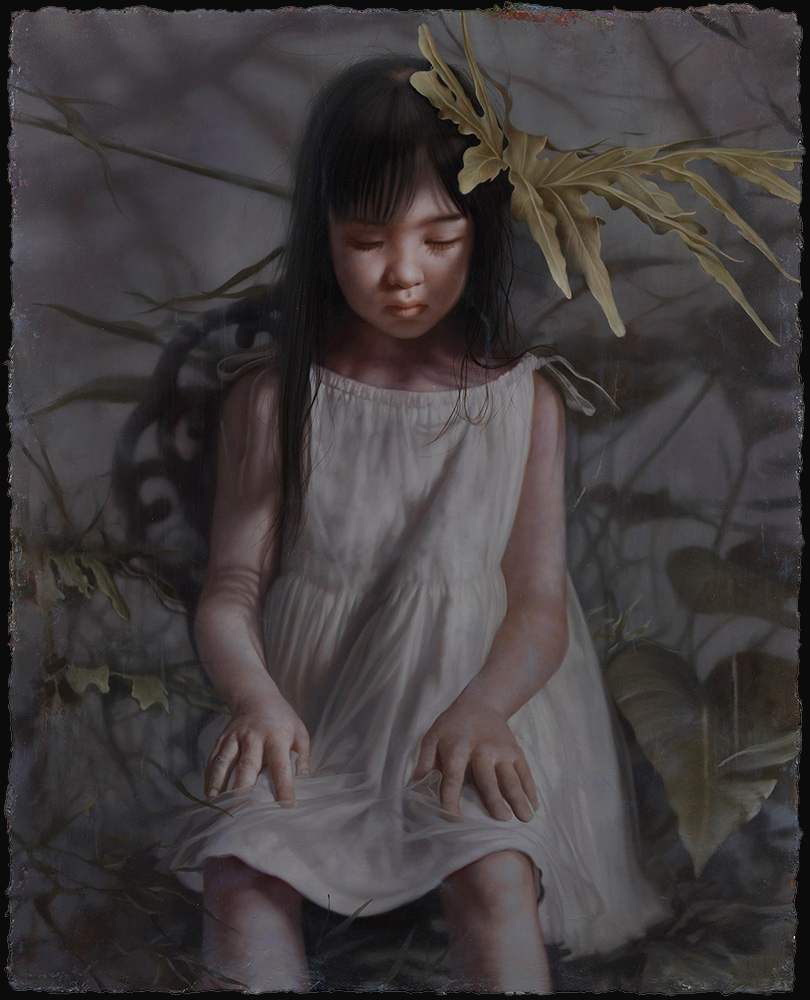
This work draws inspiration from the deeply captivating piece titled "The Garden of Forking Paths."
"The Garden of Forking Paths" takes its inspiration from the short story of the same name by the renowned Argentine writer Jorge Luis Borges, whom I deeply admire. A recurring theme in my creations is the portrayal of "Historical Game-Changers," individuals who have made significant contributions to human history. In the past, I have depicted figures such as Osamu Dazai, Ryuichi Sakamoto, and Shinzo Abe, with Jorge Luis Borges being another notable addition to this collection.
The interplay of my personal projections, a sense of temporal disarray, and the fusion of various fantasies also find expression in this work. My understanding of contemporary culture revolves around the intricate interplay between history and the present, Eastern and Western cultures, literature, and music, all intertwined in a web of imaginative complexity. While this artwork bears the name "The Garden of Forking Paths" and indeed depicts a garden, it also encapsulates my self-projection (in the form of the young girl), various scenarios from my life as an artist in the studio, the disorienting sense of time (both inside and outside the studio), and a myriad of fantasies that emerged during the extended creative process. In essence, one could say that I exist within my own "Garden of Forking Paths."
What lies within the gaze of the figures in the paintings is enigmatic.
The true allure lies in the fact that viewers can never be certain of what these figures are perceiving. They may glimpse the depths of the cosmos, witness distant pasts and futures, focus solely on the viewer, or contemplate the intangible atmosphere shared with the viewer. This enigma is what I continually seek to capture. Leonardo da Vinci's works also possess a similar quality, with the eyes of the figures I portray harboring a comparable mystery.
Inspiration for my creations stems from "Historical Game-Changers."
I draw ideas from various sources, including human culture, history, music, political events, or even simple experiences. For instance, my previous "Historical Game-Changers" series originated from my visit to the Venice Biennale. During that time, while en route to an art museum, I passed by an art academy, and upon entering the museum, I sensed a distinct change in the atmosphere. I could feel the essence of Titian and the training ground of generations of masters. This experience inspired me to embark on a creative journey to depict great masters who altered the course of human history. "Historical Game-Changers" serves as one example of my creative process. Of course, inspiration also flows from the works of individuals like Osamu Dazai and Ryuichi Sakamoto.
Please note that the translation has been tailored to be more academic in tone and structure.
Layers of Paint, Like a Labyrinth of Time
The traditional techniques of oil painting, such as glazing, layering, and the techniques I have developed through trial and error, all have their place in my works. One day, I began organizing the pigments on my palette after work and applying them to the edges of the canvas. Since my works often have extended creation periods, spanning several months, the accumulating layers of pigments at the canvas's edge gradually build up, forming the unique style of my works. In the case of the exhibition piece "The Garden of Forking Paths," the pigments accumulated at the canvas's edge resemble my diary, akin to geological strata, documenting my daily work. The book mentions the labyrinth of time, and the layers of pigments in "The Garden of Forking Paths" also symbolize, to some extent, the labyrinth of time. I also enjoy using techniques such as rubbing and scraping, sometimes intentionally recording words. These traces may be covered or faintly visible in the subsequent painting process, and I prefer to keep them in their natural state. I believe that even when covered, these traces leave an impression of time.
Crossing Genres, Seeking My Own Language and Form
"Realism" is just a concept and a genre; I consider it not just a concept or genre, but rather what I am pursuing in my art. I graduated from an art institute and studied art history, so I understand what "realism" means within its definitions. Through exhibitions and travels, I have visited many different countries and have a deep interest in different cultures. I want to incorporate all of these into my creations, with realism in the history of oil painting being one of the important themes. In this chaotic era, I am striving to find my own language, a language that is accompanied by my life experiences and the forms of painting that have emerged. However, I no longer consider which category my paintings belong to.
Living in Taiwan and Experiencing Various Cultures and Arts During Travels Currently
My studio is located in Taiwan. Taiwan is a small island nation, and I have been living here for a long time, but there aren't many places I can visit within the country. For me, a way to step away from my creative work is through travel, and I very much enjoy traveling to the countries where I am exhibiting and exploring the local culture alongside my works. This not only provides me with the opportunity to meet collaborators but also allows me to experience the local culture and arts. Over these years, I have accumulated many experiences, and for me, this has become a suitable way of life.
Lo Chan Peng , born in Taipei in 1983, holds a master's degree in Western painting from the Chinese Culture University and National Taiwan Normal University. He has received several awards, including the ARC Purchase Award, Art Renewal Center (ARC) Honorable Mention for Portraiture, ARC People's Choice Award, Chi-mei Cultivation Award, and The Kaohsiung Award (2008). He has participated in artist-in-residence programs around the world, including ARC Salon, Sotheby's New York (2021), the European Museum of Modern Art in Barcelona (2021), and Berlin (2011).
Link to the original Hoki Museum article: https://www.hoki-museum.info/eyes-interview-lochanpeng
深く魅了された作品から着想を得た「⼩徑分岔的花園」
「⼩徑分岔的花園」は私がとても好きなアルゼンチンの⽂豪、ホルヘ・ルイス・ボルヘス氏の短編⼩説「⼩徑分岔的花園 (The Garden of Forking Paths)」から着想を得ました。彼の思想に深く魅了され、同時に私の創作の⼀つの⽀流は、「歴史を変えた⼈々」というもので、⼈類の歴史に様々な貢献をした偉⼤な⼈々を描くことです。太宰治さんや坂本龍⼀さん、安倍晋三さんなどを描いてきましたが、ホルヘ・ルイス・ボルヘス氏もその中の⼀⼈です。
私⾃身の投影と時間感覚の混乱、様々な妄想の融合
私の現代⽂化への理解は、歴史と現在、東洋と西洋の⽂化、⽂学と⾳楽が混合して、想像⼒を通じて混乱している関係であると感じています。この作品は「⼩徑分岔的花園」という名前があり、確かに花園を描いていますが、私⾃身の投影(少女)と、アーティストとしてスタジオにいる時のさまざまな状況、時間感覚の混乱(スタジオ内と外の時間の混乱感)も混ざっており、長期の創作プロセスで浮かんでくる様々な妄想が融合したものです。要するに、私⾃身が⼩徑分岔的花園にいる状態と⾔えるでしょう。
絵画の中の人物が見ているもの
それが分からないことこそが魅⼒の境地
最⾼の眼差しとは、観客が描かれた⼈物が何を⾒ているのか永遠に分からないことです。彼らは宇宙の深淵を⾒たり、遠い過去や未来を⾒たり、観客だけを⾒たり、または観客と彼らの間の空気を⾒たりすることができます。これは私が追求する魅⼒的な境地です。ダ・ヴィンチの作品も同様であり、私が描く⼈物の⽬が⾒るものも同じようなものです
創作のアイデア
「歴史を変えた⼈々」
⼈類の⽂化、歴史、⾳楽、政治的な出来事、または単純な体験から創作のアイデアを発想しています。例えば、私が以前に制作した「歴史を変えた⼈々」シリーズは、ヴェネツィアビエンナーレを訪れた時の経験から⽣まれました。当時、美術館に向かう途中で美術アカデミーを通りかかり、美術館に入る瞬間、吸う空気がとても異なっていることを感じました。そこでティツィアーノの息遣いや、代々の巨匠たちが学び、訓練を受けた空気を感じることができました。そこで、⼈類の歴史を変えた偉⼤な巨匠たちを思い、制作を始めることにしました。「歴史を変えた⼈々」は私がアイデアを発想した1つの例です。もちろん、太宰治さんや、坂本龍⼀さんの作品からも制作のインスピレーションを得ています。
絵の具の層、交錯が時間の迷宮のよう
従来の油彩の基本技法であるグレージング、レイヤーでの塗装、アラプリマに加えて、⾃分で試⾏錯誤して⽣み出した技法もあります。ある⽇、仕事後のカラーパレットの絵の具を整理してキャンバスの端に塗りつけることを始めました。作品の創作期間が非常に長く、数か⽉に及ぶことが多いため、キャンバスの端に蓄積された絵の具の層は徐々に積み重なり、私の作品の特別なスタイルを形成しています。今回の展⽰作品「⼩徑分岔的花園」でも同様で、キャンバスの端に積み重なった絵の具は私の⽇記のようでもあり、地質の岩層のようでもあり、私の毎⽇の仕事を記録しています。 「⼩徑分岔的花園 (The Garden of Forking Paths)」という本では時間の迷宮について⾔及しており、絵の具の交錯がこの意味でも時間の迷宮となっています。また私は作品に、こする、引っかくなどの技法を使⽤するのが好きで、時には意図的にいくつかの⾔葉を記録することがあります。後の描画過程でこれらの痕跡が覆われることもあれば、少し⾒え隠れすることもありますが、⾃然なまま残すことが好きです。覆われても問題ないと思うのは、どんな過程でも時間の印象を残すからです。
ジャンルを超えた私自身の言語、形式を見つけたい
“写実絵画”は単なる概念やジャンルに過ぎず、私は⾃分⾃⾝の絵画を追求していると考えています。 私は美術研究所を卒業していますが、美術史を学び、定義の中での「写実絵画」が何を意味するかも理解しています。展覧会や旅⾏を通じて、多くの異なる国々を訪れ、 異なる⽂化に興味を持っています。
⾃分の創作にこれらすべてを融合させたいと考えてお り、油絵の歴史において写実絵画は代表的なテーマのひとつです。 この混沌とした時代に私⾃⾝の⾔語を⾒つけることを追求しており、それは自身の⼈⽣経験とともに形成された絵画形式を伴います。 しかし、それは⾃分の絵画がどのような分類に属するかを考えることはもはや遠い過去のことです。
台湾で暮らし、旅先で各地の文化や芸術に触れる
現在私のスタジオは台湾にあります。台湾は⼩さな島国で、私はここで長い間⽣活していますが、国内で⾏ける場所はあまり多くありません。私にとって、制作から離れる⽅法は旅⾏することであり、展⽰会のある国に⾏って作品と⼀緒にその地を旅することがとても好きです。協⼒する相⼿と知り合うことができるだけでなく、その⼟地の⽂化や芸術にも触れることができるので、これらの年⽉で多くの経験を積み、今となっては私にとって適したライフスタイルです。
羅展鵬
1983年 台北市生まれ。中国文化大学、 国立台湾師範大学西洋画の修士号を取得。ARC Purchase Award、Art Renewal Center (ARC), USA Honorable Mention / Portraiture, USA ARC People's Choice Award, USA Chi-mei Cultivation Award, The Kaohsiung Award (2008) など数々の賞を受賞。ARCサロン、サザビーズNY(2021年)、ヨーロッパ近代美術館、バルセロナ(2021年)、ベルリン(2011年)など世界各地でアーティスト‧イン‧レジデンスを行っている。
