Using Portraiture to Question the World
Lo Chan Peng's Figurative Paintings and His Sensitivity to the Times
Interview & Text by Tseng Hsiao-Ju
Images courtesy of Lo Chan Peng
No. 600 Artist Magazine – Feature Interview with Artist Lo Chan Peng, pp. 94–99
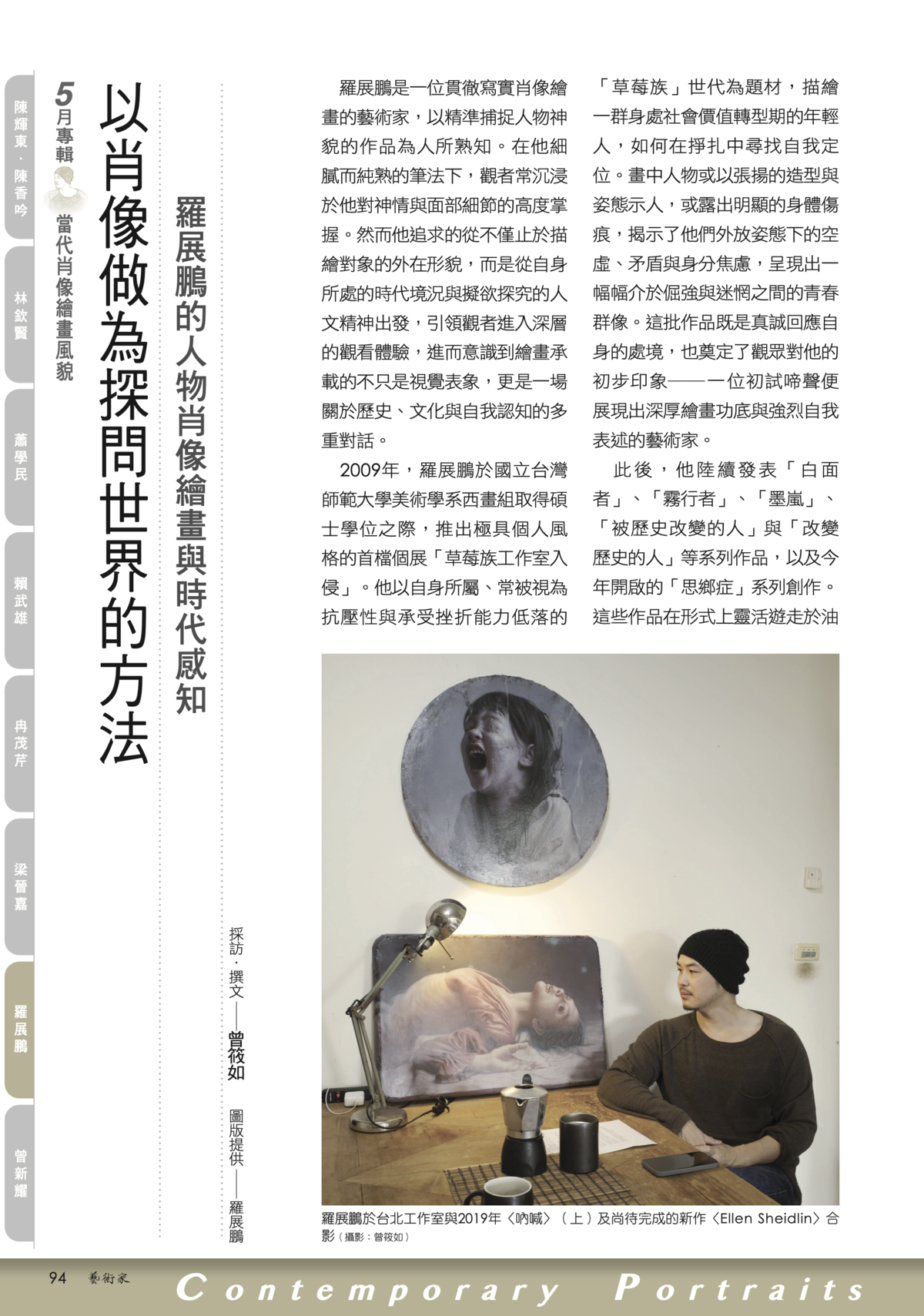
Lo Chan Peng is an artist deeply committed to the traditions of realist portraiture. He is known for his precise depictions of the human face and spirit, rendered with a refined technique that immerses viewers in his careful study of expression and detail. Yet, Lo’s artistic pursuit is never limited to the surface likeness of his subjects. Instead, his portraits emerge from the social context he inhabits and his ongoing exploration of humanistic concerns—inviting viewers into a multilayered visual dialogue encompassing history, culture, and self-reflection.
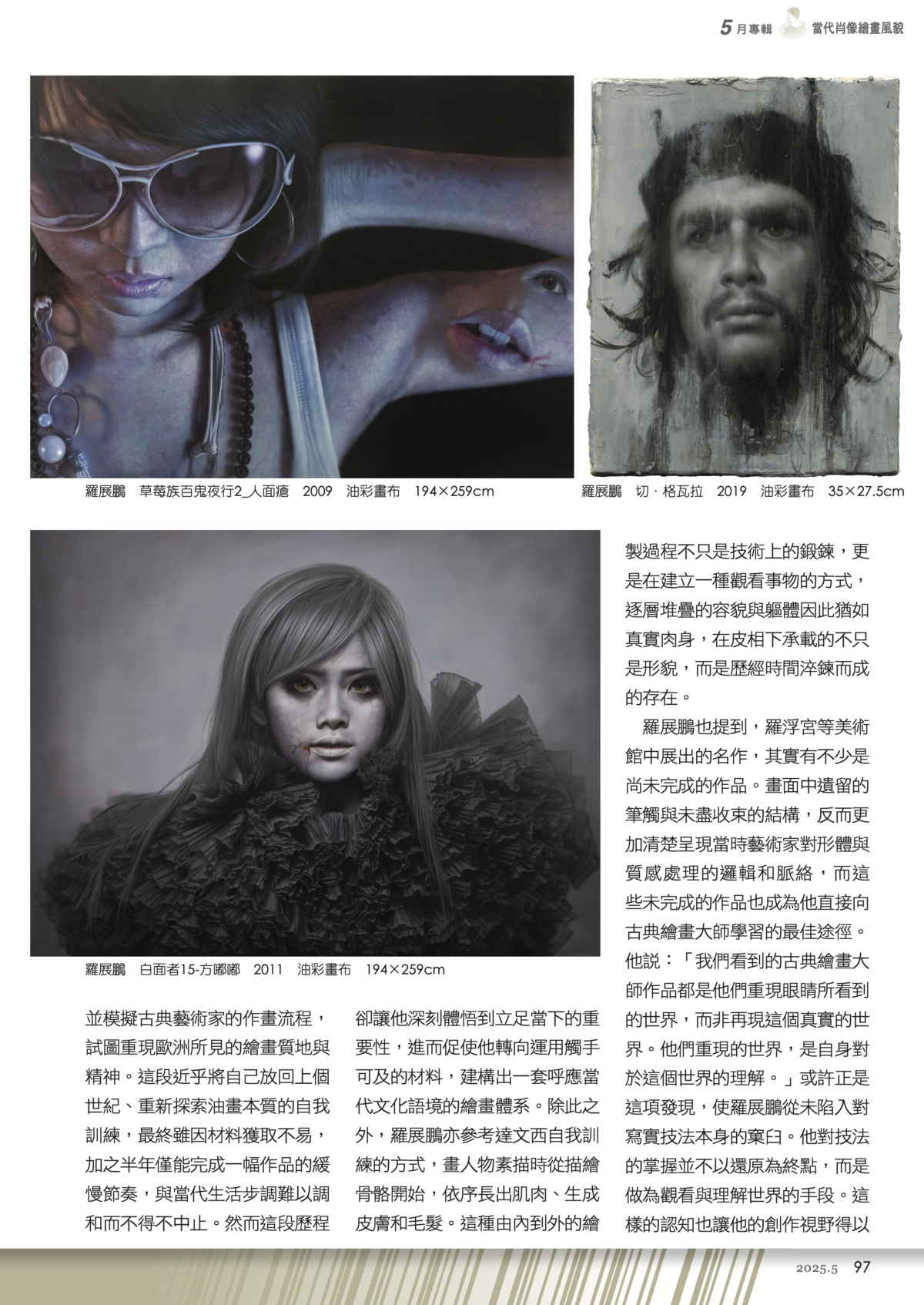
In 2009, while completing his MFA in Western Painting at National Taiwan Normal University, Lo launched his first solo exhibition, “Strawberry Generation Studio Invasion.” This series took inspiration from his own generational identity—the so-called “strawberry generation,” often criticized for being fragile and unresilient. His paintings portrayed young people navigating the turbulence of a shifting value system. Through bold postures and visible wounds, Lo captured the vulnerability and identity crisis of a generation teetering between defiance and disorientation. The series served as an honest response to his personal situation and firmly established his identity as an artist of considerable technical skill and an expressive individual voice.
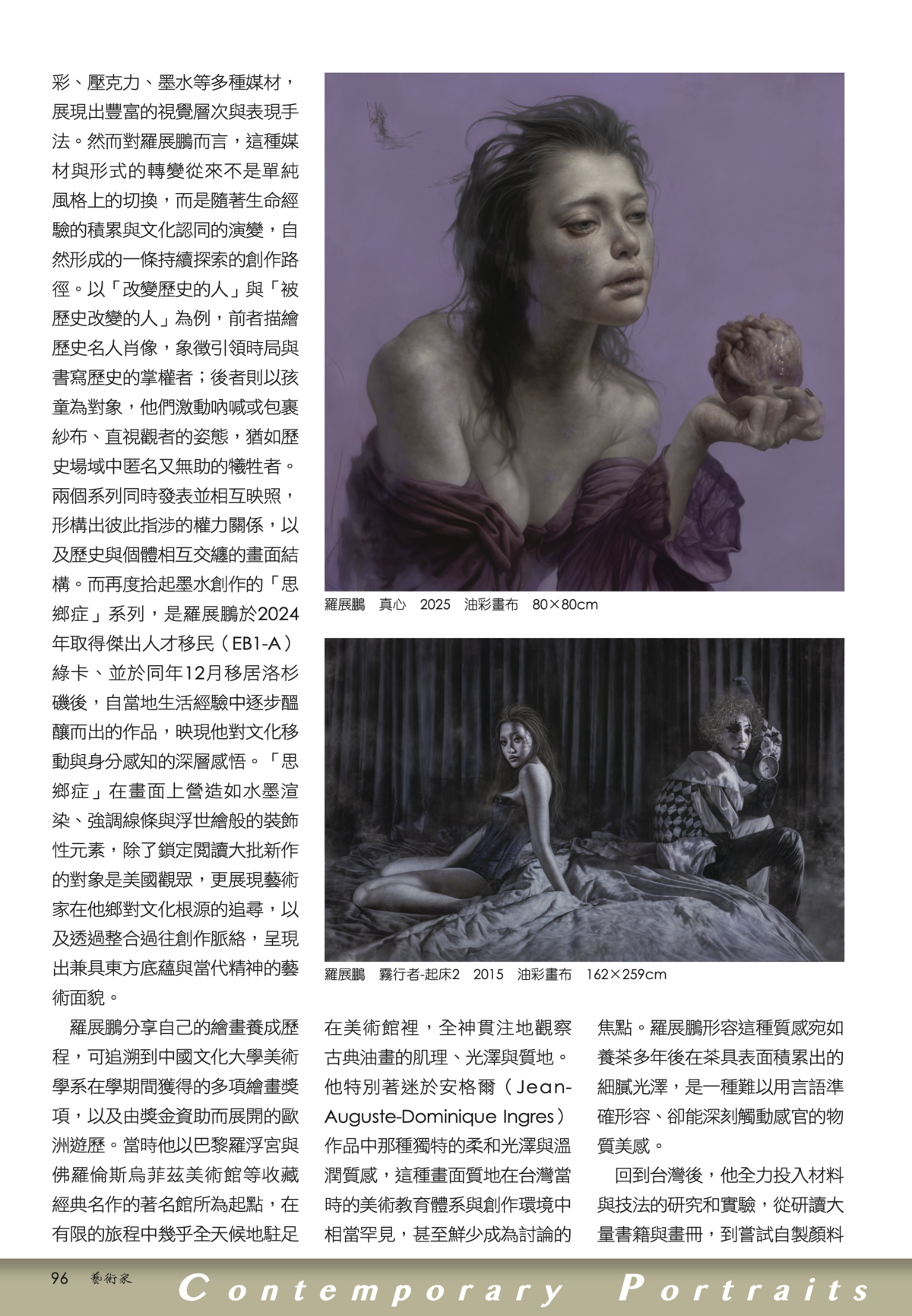
Subsequent series—including “The White-Faced Ones,” “The Mist Walkers,” “Inkstorm,” “Those Changed by History,” and “Those Who Change History”—have shown Lo’s dexterity in moving between media such as oil, acrylic, and ink. Each body of work demonstrates rich layers and formal experimentation. But for Lo, these shifts are not stylistic choices for their own sake—they are shaped by life experience and evolving cultural identity. His practice is a continuous inquiry.
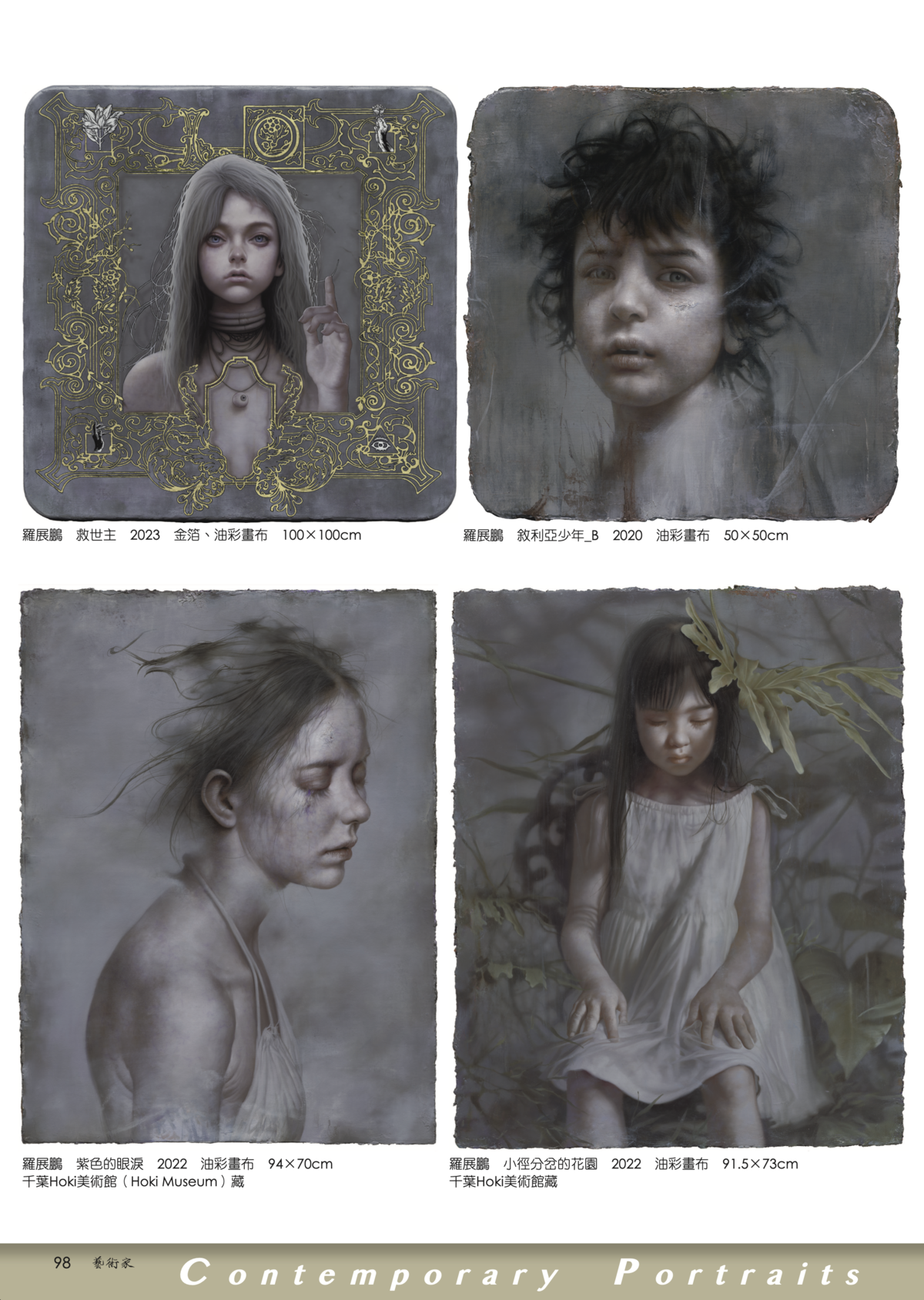
Consider, for example, the contrast between “Those Who Change History” and “Those Changed by History.” The former presents portraits of historical figures who shaped the course of events, while the latter portrays children—bandaged, shouting, or staring directly at the viewer—suggesting anonymous, powerless victims of history. Exhibited side by side, the two series reflect upon power structures and the entanglement of individual and historical narratives.
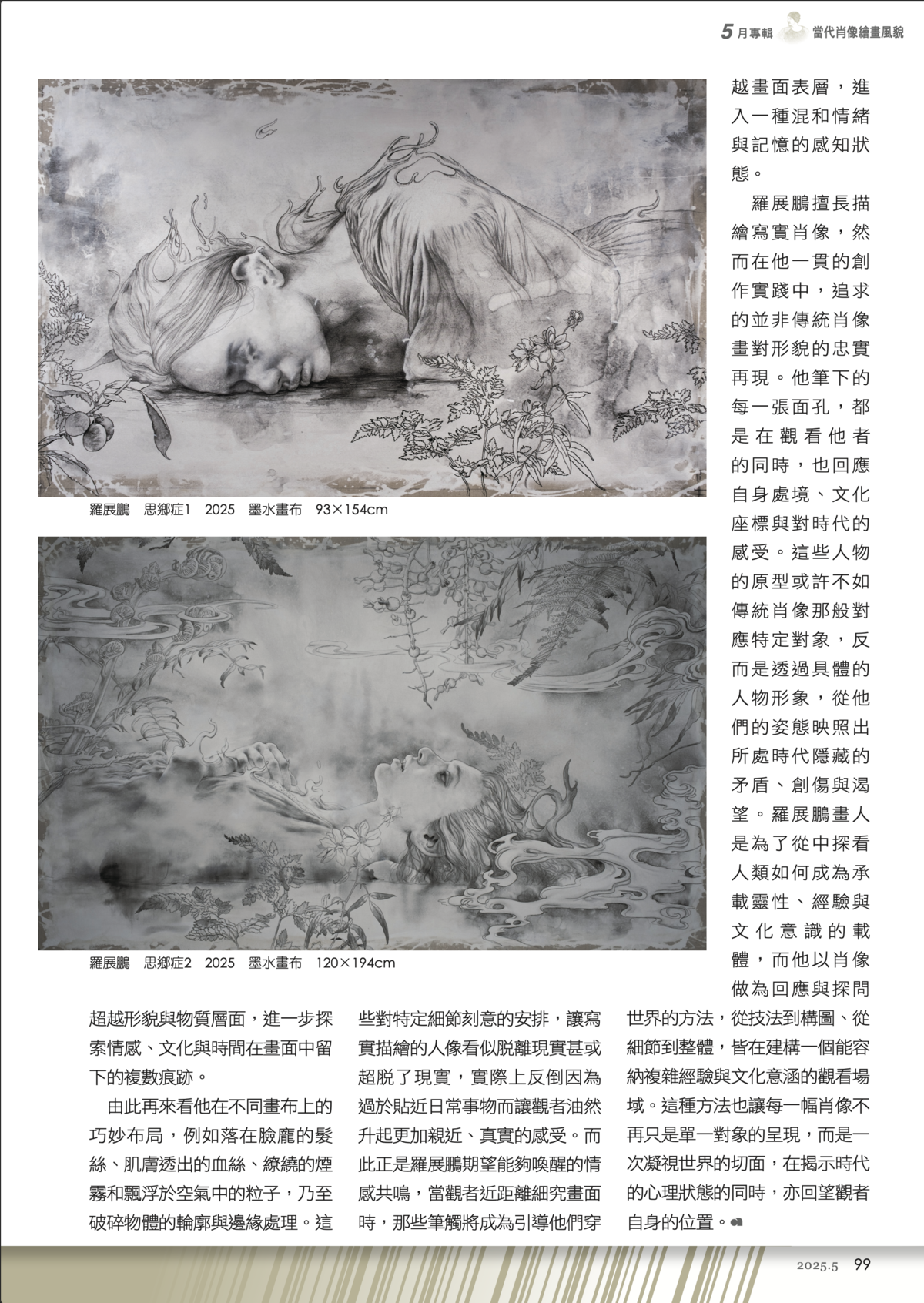
His recent series “Homesickness,” created after relocating to Los Angeles in December 2024 under an EB1-A visa for individuals of extraordinary ability, revisits the medium of ink. Drawing from his new environment, Lo reflects on themes of cultural displacement and identity. In these works, washes of ink blend with flowing lines and decorative elements reminiscent of ukiyo-e. While aimed at an American audience, these paintings also reveal the artist’s deepening search for cultural roots and his synthesis of Eastern heritage and contemporary vision.
Lo’s artistic development can be traced back to his undergraduate years at Chinese Culture University, where he received several painting awards. These accolades enabled him to travel to Europe, where he studied masterpieces in the Louvre and the Uffizi. Immersed in the works of the old masters, he spent hours scrutinizing the textures, luminosity, and materiality of classical oil paintings.
He was especially drawn to the soft glow and tenderness in the works of Jean-Auguste-Dominique Ingres—a visual quality largely absent from the art education and creative environment of Taiwan at the time. He likened this subtle surface to the patina developed on a teacup after years of use: difficult to describe, yet sensually affecting.
Returning to Taiwan, Lo dedicated himself to material research and technical refinement—reading extensively, hand-making his own pigments, and replicating the painting process of classical artists. This rigorous self-training felt like traveling back in time. Ultimately, the slow pace (only one painting every six months) and challenges of sourcing materials made it unsustainable. Still, the experience impressed upon him the importance of being rooted in the present and led him to adapt his practice to more accessible media suited to contemporary life.
He also adopted Leonardo da Vinci’s anatomical method, beginning his figure studies with skeletal structure, then layering on muscle, skin, and hair. This from-the-inside-out approach was not merely a technical exercise; it became a way of seeing—constructing the body as a vessel of lived time and embodied presence.
Lo observed that many masterpieces in the Louvre are unfinished, revealing raw brushwork and compositional scaffolding. These incomplete works allowed him to study the thought processes behind form and surface. “What we see in classical paintings is not a reproduction of reality,” he says. “It’s a reconstruction of the world as the artist understands it.”
This insight freed Lo from the trap of mere realism. Technique, for him, is not about replication, but a means to perceive and interpret the world. His vision expands beyond appearances into the terrain of emotion, cultural meaning, and the passage of time.
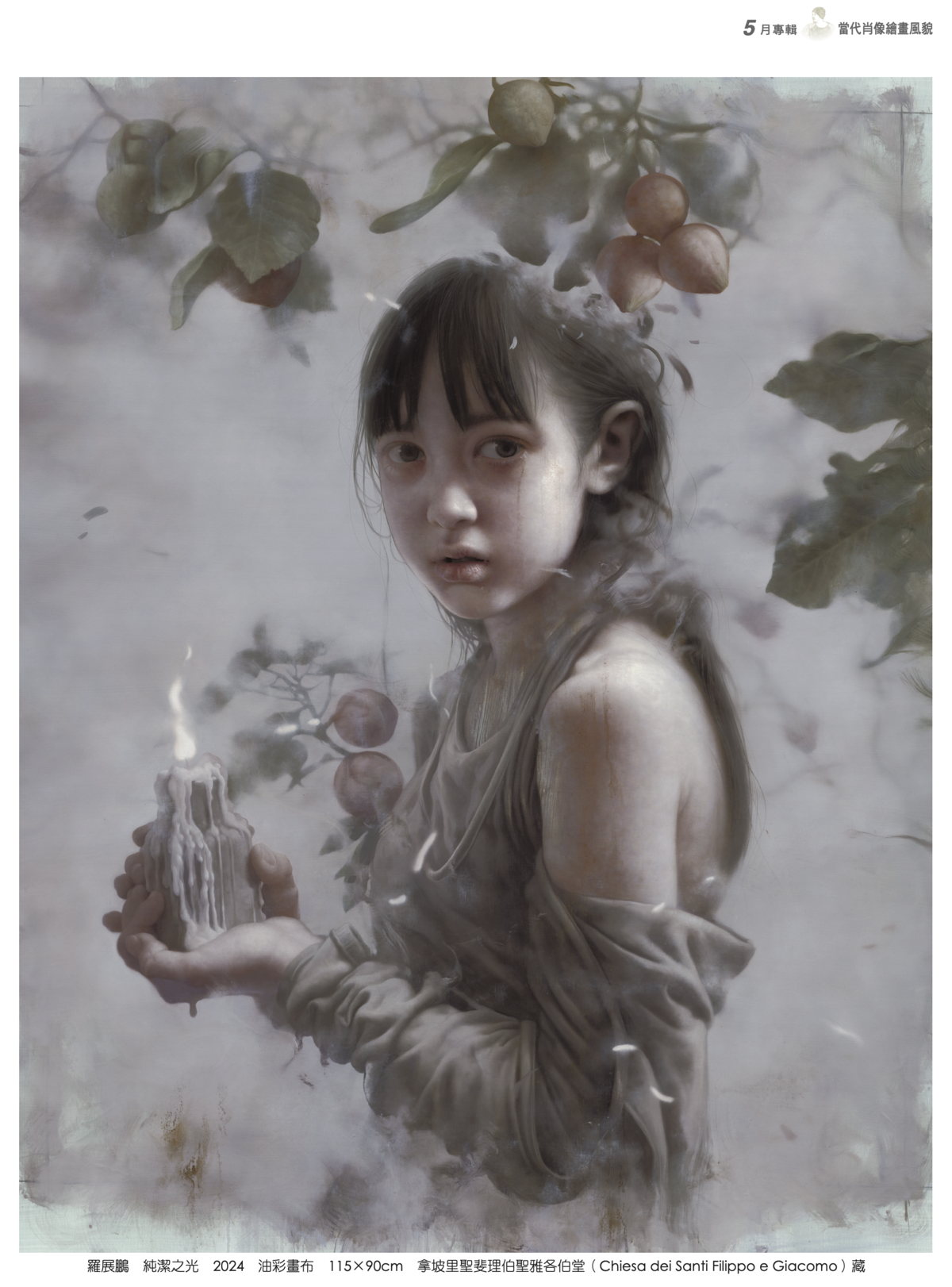
His use of meticulous details—strands of hair across a cheek, veins beneath translucent skin, suspended smoke and drifting particles, fractured edges of objects—creates portraits that seem to transcend reality. Yet paradoxically, this closeness to ordinary things invites an uncanny sense of intimacy. Through these choices, Lo aims to evoke emotional resonance. As viewers draw close, his brushwork becomes a tactile guide, leading them through surface into a perceptual space of memory and feeling.
While Lo is celebrated for his skill in realist portraiture, his art is never a literal transcription of a face. Each figure reflects not only an observed other, but a meditation on his own cultural coordinates and emotional responses to the time in which he lives. Rather than resembling specific sitters, his portraits are shaped embodiments of contemporary contradictions, traumas, and longing.
Lo paints people not to capture likeness, but to investigate how humanity becomes a vessel for spirit, experience, and cultural consciousness. Portraiture becomes a tool of inquiry—a constructed space that absorbs complexity. His technique, composition, and detail are all in service of a broader vision: portraits not as static likenesses, but as mirrors through which to contemplate history, identity, and the human condition.